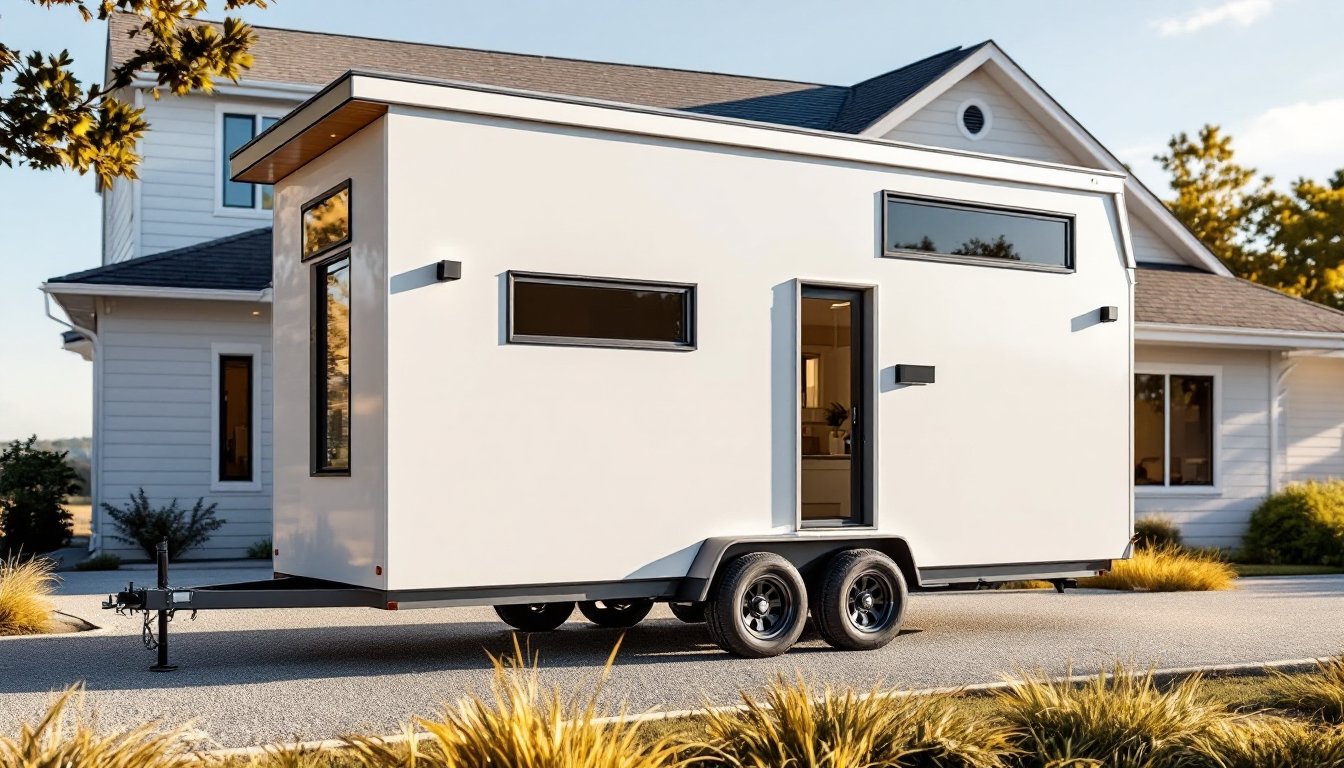
The Tesla tiny house isn’t something you can walk into a showroom and drive home, yet it’s become one of the most talked-about concepts in sustainable micro-living. Originally built as a mobile demonstration unit to showcase Tesla’s solar and battery technology, the tiny home made waves in 2017 touring Australia and briefly appeared in North America. Since then, interest in Elon Musk’s minimalist housing approach has exploded, with thousands searching for Tesla tiny homes for sale, curious about interior specs, and wondering when they’ll actually hit the market. If you’re hoping to snag one, here’s what you need to know in 2026, from where to find the original units to replicas, features, costs, and whether this tiny footprint fits your lifestyle.
Table of Contents
ToggleKey Takeaways
- Tesla does not manufacture or sell tiny homes as a standard product; authentic demo units are rare collectibles commanding $100,000+ at auction, while Tesla-inspired replicas from builders like Tumbleweed and Boxabl offer livable alternatives starting around $60,000–$150,000 fully equipped with solar and battery systems.
- A Tesla tiny house requires careful consideration of zoning laws, financing challenges (RV loans preferred over mortgages), and location—those in temperate climates with remote work arrangements and flexible local regulations are best positioned to benefit from off-grid micro-living.
- Full ownership costs extend beyond the purchase price and include site preparation ($500–$8,000), utility connections ($1,000–$5,000), transportation ($5,000–$10,000 for long distances), specialty insurance ($600–$1,200 yearly), and eventual battery replacement ($7,000+ after warranty expiration).
- Authentic Tesla tiny homes are exhibition units without plumbing, kitchens, or sleeping areas, making third-party replicas superior for actual habitation since they include proper insulation (R-30+ roof), full residential fixtures, and code compliance per IRC Appendix Q standards.
- Energy independence through solar and battery storage works best for those in high-electricity-cost regions or areas with grid instability, but requires monthly maintenance, professional electrical installation, and careful battery management for longevity.
- Tesla tiny home owners should expect 20–30% depreciation in the first five years, making them vehicles rather than appreciating assets; permanent foundation prefab units or traditional ADUs may better preserve long-term property value.
What Is the Tesla Tiny House and Why Is It Popular?
The Tesla Tiny House is a compact, mobile demonstration unit roughly 6 × 12 feet that Tesla designed to promote off-grid living powered by solar energy. It features a 2-kilowatt solar array mounted on the roof, a Powerwall 2 battery for energy storage, and interactive displays explaining Tesla’s residential energy products. The exterior is clad in a modern white shell mounted on a trailer chassis, making it towable with a standard vehicle hitch.
Elon Musk’s connection to tiny homes goes deeper than the demo unit. In 2021, Musk famously claimed he lives in a $50,000 prefab home in Boca Chica, Texas, near the SpaceX facility, though he’s never officially launched a “Musk tiny house” product line. That modest lifestyle stance resonated with minimalists and sustainability advocates, fueling speculation that Tesla would eventually sell tiny homes directly to consumers.
Why the hype? The Tesla tiny home concept merges off-grid energy independence, minimalist design, and the brand’s tech-forward reputation. Tiny house enthusiasts see it as a validation of the movement, while Tesla fans want a turnkey solution that pairs solar power with EV charging. The fact that only a handful of demo units were built makes the concept even more desirable, scarcity drives demand, especially when tied to a name like Musk.
It’s worth noting that the original Tesla tiny home wasn’t designed as a residence. It had no plumbing, no kitchen, and no sleeping loft, just an exhibition space. Still, the idea of a Tesla-branded, energy-autonomous small home stuck, and it continues to dominate searches and wishful thinking in 2026.
Where to Find Tesla Tiny Houses for Sale
Official Tesla Releases and Auctions
As of April 2026, Tesla does not manufacture or sell tiny homes as a standard product. The original demo unit toured Australia in 2017, made a few U.S. appearances, and was later auctioned or placed in storage. If you’re hunting for an authentic Tesla tiny house, your best bet is watching:
- Specialty auctions: Occasionally, promotional units or demo assets surface at industrial or tech-focused auctions. Sites like Ritchie Bros and Proxibid handle surplus equipment from corporations.
- Private resale: If a collector or Tesla employee acquired one, it might appear on niche marketplaces like Tiny House Listings or Bring a Trailer (yes, they list oddball trailers).
- Direct inquiries: Some folks have contacted Tesla’s energy division directly. Don’t expect a showroom model, but if a unit exists in surplus, a persistent inquiry might surface it.
Be prepared for sticker shock if you do find one. An original unit could fetch $100,000+ at auction due to rarity and brand cachet, even though its utilitarian origins.
Replica and Inspired Tiny Homes on the Market
If you can’t snag the real deal, several builders have created Tesla-inspired tiny homes that mimic the aesthetic and integrate solar-plus-battery systems. These replicas often include full residential features the demo unit lacked, sleeping lofts, kitchenettes, composting toilets, and code-compliant wiring.
Where to find them:
- Tumbleweed Tiny House Company: Offers solar-ready models with sleek, minimalist exteriors. You can spec a Powerwall-compatible setup.
- Boxabl: Known for modular, foldable homes, Boxabl’s Casita model has been linked to Musk (he may have lived in one). Pricing starts around $60,000 for the shell, plus site prep and utilities.
- Minimaliste: A Canadian builder offering luxury tiny homes with full off-grid packages, including solar arrays and lithium battery banks. Expect $80,000–$150,000 depending on size and finishes.
- Custom builders on Tiny House Marketplace: Search for “solar tiny home” or “off-grid micro home.” Many builders will replicate the Tesla aesthetic if you provide design specs.
These inspired homes often outperform the original in livability. They’re designed for year-round occupancy, include proper insulation (often spray foam or rigid foam board), and meet IRC Appendix Q tiny house standards where applicable. If your goal is sustainable micro-living rather than brand flex, a replica might be the smarter buy.
What to Expect: Features and Specifications
The original Tesla tiny house interior was spartan by design, think tech showroom, not cozy cabin. Here’s what the demo unit included:
- Dimensions: Approximately 6 feet wide × 12 feet long (72 sq ft), mounted on a single-axle trailer.
- Roof-mounted solar: 2-kW solar panel array feeding a Powerwall 2 (13.5 kWh usable capacity).
- Interactive displays: Touchscreens showing real-time energy generation, storage, and usage.
- Minimalist shell: White composite cladding, aluminum framing, tinted windows.
- No residential fixtures: No bed, no kitchen, no bathroom. Purely a demo rig.
If you’re eyeing a Tesla-inspired tiny home from a third-party builder, expect features closer to a real dwelling:
- Sleeping loft: Typically accessed by ladder or stairs, with 6.5–7 feet of headroom on the main floor and 3–4 feet in the loft.
- Kitchenette: Compact appliances like a two-burner induction cooktop, apartment-size fridge, and single-basin sink. Some builders wire for 240V to support induction and electric water heaters.
- Bathroom: Composting toilet (Nature’s Head, Separett) and a wet bath or small shower stall. Greywater systems vary, some tie into standard RV tanks, others use constructed wetlands if stationary.
- Electrical: Off-grid setups include an inverter/charger (e.g., Victron MultiPlus), charge controller, and battery bank (LiFePO4 preferred for longevity). Grid-tied systems can backfeed excess solar via a net-metering agreement, if local codes allow.
- Insulation: Closed-cell spray foam or rigid foam (R-5 to R-6 per inch) in walls and ceiling. Many builders target R-21 walls and R-30+ roof to meet energy codes.
- Trailer chassis: Dual-axle, often 7,000–10,000 lb GVWR, to handle the weight of solar, batteries, and structural loads.
One important distinction: most tiny homes on wheels (THOWs) don’t qualify as RVs under RVIA standards, nor do they always meet IRC residential codes. Check your local zoning, some jurisdictions treat them as accessory dwelling units (ADUs), others as vehicles. If you plan to live in one full-time, verify it’s built to NOAH (National Organization of Alternative Housing) or IRC Appendix Q standards, and that your lot allows it.
Safety note: Off-grid electrical systems require proper grounding, overcurrent protection, and battery venting. Lithium batteries can vent flammable gases if damaged. If you’re not comfortable with NEC Article 690 (solar) and Article 706 (energy storage), hire a licensed electrician for the install and inspection.
Cost Considerations and Pricing Insights
Pricing for Tesla tiny homes, or inspired builds, varies wildly depending on authenticity, features, and market conditions. Here’s a breakdown:
Original Tesla demo unit (if available):
- Auction or private sale: $100,000–$200,000+
- Mostly collectible value: not suitable as-is for habitation without major retrofits.
Replica or inspired tiny homes:
- Shell only (no interior finish, no solar): $25,000–$50,000
- Turn-key, off-grid ready (solar, battery, full interior): $70,000–$150,000
- Luxury builds (high-end finishes, oversized battery banks, custom layouts): $150,000–$250,000
Solar and battery system add-ons (if not included):
- Powerwall 2: ~$11,500 plus installation (check current incentives and rebates for regional pricing updates)
- 5-kW rooftop solar array: $10,000–$15,000 installed, or $2.00–$3.00/watt depending on location
- Inverter/charger and wiring: $2,000–$5,000
Site prep and permitting:
- Foundation or pad: Gravel pad ($500–$1,500), concrete piers ($1,000–$3,000), or full slab if converting to a permanent ADU ($3,000–$8,000).
- Utility connections: If not fully off-grid, expect $1,000–$5,000 for electric hookup, water tap, and septic or sewer tie-in.
- Permits: Vary by jurisdiction. Some areas charge $500–$2,000 for ADU or temporary dwelling permits. Always check local building departments before delivery.
Hidden costs:
- Transportation: Hauling a THOW can run $2–$5/mile depending on size and route. A cross-country move could add $5,000–$10,000.
- Insurance: Tiny homes on wheels often require specialty RV or chattel insurance. Expect $600–$1,200/year.
- Maintenance: Roof resealing, tire checks, and battery warranty service (Powerwall has a 10-year warranty, but replacement after that is $7,000+).
Financing is tricky. Most lenders treat THOWs as personal property, not real estate, so conventional mortgages don’t apply. Options include RV loans (if RVIA-certified), personal loans, or chattel mortgages. Interest rates are typically higher than standard home loans, expect 6–10% as of 2026.
Bottom line: A fully outfitted, Tesla-inspired tiny home with solar and battery will cost about the same as a down payment on a traditional home in many markets. The value proposition hinges on lifestyle goals, not pure economics.
Is a Tesla Tiny House Right for Your Lifestyle?
A Tesla-inspired tiny home or Elon Musk small home concept isn’t for everyone. Here’s an honest assessment of who benefits and who might struggle:
It’s a good fit if you:
- Value energy independence: Off-grid solar and battery storage mean low or zero utility bills. If you live in an area with high electric rates or unreliable grid, this pays dividends.
- Embrace minimalism: You’re comfortable with 100–400 sq ft of living space and own fewer than 500 items. If you can’t let go of stuff, a tiny home will feel like a storage locker.
- Have flexible zoning: Your property allows ADUs, tiny homes, or RVs as dwellings. Some progressive cities (Portland, Austin, parts of California) have eased restrictions: others ban them outright.
- Live in a temperate climate: Heating and cooling a tiny, well-insulated space is manageable in mild zones. Extreme heat or cold strain small HVAC systems and drain batteries fast.
- Work remotely or are semi-retired: Limited space works if you’re not home all day. Families or those needing dedicated office space may find it cramped.
It’s a tough sell if you:
- Need space for hobbies or kids: No room for a workshop, craft area, or separate bedrooms. Multi-person occupancy gets tight fast.
- Require traditional financing: Banks rarely offer mortgages for THOWs. If you can’t pay cash or secure an RV loan, this path is harder.
- Face restrictive zoning: Many suburban and rural areas still classify tiny homes on wheels as vehicles, banning them as primary residences. Fighting city hall is expensive and time-consuming.
- Prioritize resale value: Tiny homes depreciate more like vehicles than real estate. Expect to lose 20–30% in the first five years unless you’re selling a rare, branded unit.
Practical alternatives to consider:
- Prefab ADU: Companies like Boxabl or Studio Shed offer modular units that sit on permanent foundations, qualify for mortgages, and add property value. Many small-space designs blend efficiency with livability.
- Park model RV: RVIA-certified, often 400 sq ft, and can be financed as an RV. Easier to place in RV parks or on private land zoned for recreational vehicles.
- DIY conversion: If you have carpentry skills, converting a cargo trailer or shed into a micro-dwelling lets you control costs and features. Advanced framing techniques can help maximize space and energy performance.
Final reality check: The Tesla tiny house as originally built doesn’t exist as a consumer product in 2026. What’s available are inspired builds or rare collectibles. If you’re drawn to the concept, focus on the features, solar autonomy, minimal footprint, modern design, rather than the badge. A well-built, code-compliant tiny home from a reputable builder will serve you better than chasing a marketing gimmick that was never meant to be a house in the first place.