Indoor air quality matters more than most homeowners realize. Dust, pollen, pet dander, and volatile organic compounds (VOCs) circulate through your home every day, affecting respiratory health and overall comfort. Air purifiers tackle these pollutants, but not all technologies work the same way. Ionizers and ozone generators, common features in many units, can produce trace ozone as a byproduct, raising concerns for sensitive individuals and households with children or pets. A non-ionizing air purifier skips the electrical charge approach and relies on mechanical filtration to trap particles safely and effectively. This guide walks through what makes these units different, why they’re often the smarter choice, and how to pick one that fits your space and budget.
Table of Contents
ToggleKey Takeaways
- An air purifier without an ionizer uses mechanical filtration like HEPA and activated carbon to trap particles safely, eliminating the risk of ozone generation that can irritate lungs and respiratory systems.
- Non-ionizing purifiers with true HEPA filters capture 99.97% of particles as small as 0.3 microns without introducing secondary pollutants, making them ideal for homes with children, pets, or anyone with respiratory conditions.
- When selecting an air purifier without an ionizer, match the unit’s Clean Air Delivery Rate (CADR) to your room size for at least four to five air changes per hour, and verify CARB certification for guaranteed ozone emissions below safe limits.
- Regular filter maintenance—replacing HEPA filters every 6-12 months and monitoring carbon saturation—ensures consistent performance and prevents airflow reduction that compromises air quality.
- Non-ionizing air purifiers operate quieter than ionizing models and require no cleaning of collection plates, delivering predictable, measurable performance without electrical discharge byproducts.
What Is an Air Purifier Without an Ionizer?
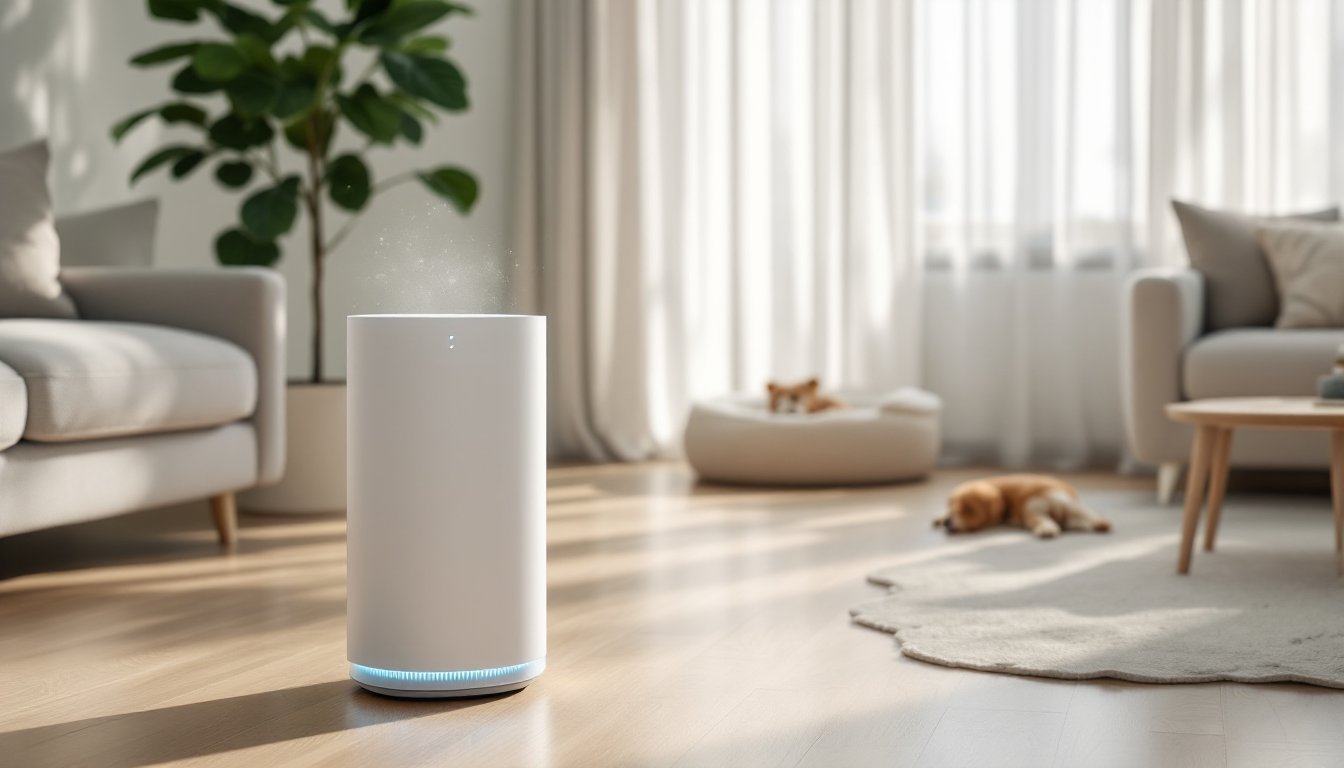
An air purifier without an ionizer uses physical filters, typically HEPA (High-Efficiency Particulate Air) or activated carbon, to capture airborne particles and odors. Instead of electrically charging particles to make them cling to collection plates, these units pull air through dense filter media that traps contaminants mechanically.
Ionizers work by releasing negatively charged ions into the air. Those ions attach to dust, pollen, and other particles, causing them to drop out of the air or stick to surfaces. The catch? This process can generate ozone, a lung irritant that’s particularly problematic for anyone with asthma or chronic obstructive pulmonary disease (COPD). The EPA sets safe ozone levels at 0.070 parts per million (averaged over eight hours), and some ionizing units can push close to that threshold in small, poorly ventilated rooms.
A no ozone air purifier eliminates that risk entirely. By sticking to filtration methods that don’t involve electrical discharge or UV-C ionization, these units provide cleaner air without introducing secondary pollutants. That makes them the go-to for nurseries, bedrooms, home workshops, and any space where air quality can’t be compromised.
Why Choose a Non-Ionizing Air Purifier for Your Home?
Non-ionizing units deliver predictable, measurable performance. There’s no guesswork about ozone output, no cleaning collection plates, and no concerns about whether charged particles are settling on furniture or walls. For DIYers tackling projects that generate sawdust, paint fumes, or drywall dust, a non toxic air purifier keeps the air clear without adding chemical byproducts.
Health Benefits of Avoiding Ionizers
Ozone irritates mucous membranes and lung tissue even at low concentrations. Short-term exposure can trigger coughing, chest tightness, and shortness of breath. Long-term exposure may worsen asthma and reduce lung function, especially in children and older adults. The California Air Resources Board (CARB) certifies air purifiers that meet strict ozone emission limits, and non-ionizing models easily pass that standard.
Households with pets, young children, or anyone with respiratory conditions benefit most from skipping ionizers. HEPA filtration captures 99.97% of particles as small as 0.3 microns, covering pollen, mold spores, pet dander, and fine dust, without releasing anything back into the air. Activated carbon layers handle VOCs from paints, adhesives, and cleaning products, making these units ideal for workshops, laundry rooms, and basements where chemical off-gassing is common.
Non-ionizing purifiers also run quieter. Without the hum or crackle of ionization circuits, many models operate at sound levels comparable to a refrigerator, allowing them to work overnight in bedrooms without disrupting sleep.
Top Filtration Technologies in Ionizer-Free Air Purifiers
Understanding what’s inside the unit helps you match the right purifier to the job.
True HEPA filters are the workhorse. These pleated fiber mats, typically made from fiberglass, trap particles through a combination of interception, impaction, and diffusion. They’re rated to capture 99.97% of particles at 0.3 microns, which covers most allergens and fine dust. HEPA filters don’t kill bacteria or viruses, but they physically trap them, preventing recirculation.
Activated carbon filters absorb gases and odors. Carbon granules or pellets are treated to create millions of tiny pores, which trap VOCs, smoke, and cooking smells. These filters excel in kitchens, garages, and anywhere adhesives or finishes are used. For heavy odor loads, look for units with at least 1 to 2 pounds of activated carbon: skimpy carbon layers won’t last long.
Pre-filters catch larger particles, hair, lint, dust bunnies, before they clog the HEPA media. Most are washable or vacuum-friendly, extending the life of the main filter. If you’re sanding drywall or running a table saw, a good pre-filter saves money by keeping fine dust from overwhelming the HEPA.
Some models add UV-C lamps to target microorganisms. UV-C light disrupts DNA in bacteria and viruses, but effectiveness depends on exposure time and lamp intensity. It’s a bonus feature, not a substitute for filtration. Independent testing by Good Housekeeping has shown that HEPA-only systems often outperform those relying heavily on UV-C for particle removal.
Photocatalytic oxidation (PCO) uses UV light and a titanium dioxide catalyst to break down VOCs. It works, but slower than carbon filtration, and some PCO units produce trace ozone. If you want zero ozone, stick with carbon and skip the catalyst.
How to Choose the Right Air Purifier Without an Ionizer
Start with room size. Air purifiers are rated by Clean Air Delivery Rate (CADR), measured in cubic feet per minute (CFM). A unit with a CADR of 200 CFM for smoke means it clears smoke particles from 200 cubic feet of air every minute. Match CADR to your room volume for at least four to five air changes per hour. For a 12 ft × 15 ft room with 8 ft ceilings (1,440 cubic feet), you’d want a CADR around 120–150 CFM minimum.
Filter life matters. HEPA filters typically last 6 to 12 months with continuous use: carbon layers degrade faster in high-odor environments. Some units use combination filters (HEPA + carbon in one cartridge), which simplify replacement but may cost more. Check filter availability before buying, proprietary filters from obscure brands can be hard to source.
Noise level is listed in decibels (dB). Anything under 50 dB on high speed is acceptable for living areas: bedrooms benefit from units that drop to 30–35 dB on low. Fan speed controls let you dial in the balance between airflow and sound.
Energy consumption varies. Look for units with Energy Star certification if you plan to run them 24/7. Most draw between 30 and 100 watts, comparable to a laptop or light bulb.
Portability can be a factor. Units with caster wheels or handles make it easy to move from workshop to bedroom to basement as needed. If you’re refinishing furniture in the garage one weekend and painting a nursery the next, a portable unit pulls double duty.
CARB certification guarantees ozone emissions below 0.050 parts per million, well under EPA limits. It’s mandatory for units sold in California but worth checking regardless of location. Many highly rated air purifiers carry this certification as a standard feature.
Skip the bells and whistles unless they add real value. Wi-Fi connectivity and app controls are nice if you want scheduling or remote monitoring, but they don’t improve filtration. Air quality sensors that auto-adjust fan speed based on particle levels can save energy and filter life, making them a worthwhile upgrade.
Best Practices for Maintaining Your Non-Ionizing Air Purifier
Filters clog over time, reducing airflow and efficiency. Most units have filter-change indicators, but visual inspection works too. If the HEPA filter looks gray or brown instead of white, it’s time to swap it. Don’t try to wash or vacuum HEPA filters unless the manufacturer explicitly says it’s safe, damage to the media compromises filtration.
Clean or replace pre-filters monthly, especially during heavy-use periods. A vacuum with a brush attachment or a rinse under lukewarm water (for washable types) keeps large particles from choking airflow. Let washable filters dry completely before reinstalling to prevent mold growth.
Wipe down the exterior and intake grilles every few weeks. Dust buildup around vents restricts airflow and makes the fan work harder. A microfiber cloth and a little all-purpose cleaner handle most grime. Avoid spraying cleaner directly into the unit, mist the cloth instead.
Place the purifier where air can circulate. Corners and tight spaces reduce intake efficiency. Leave at least 12 to 18 inches of clearance on all sides. Running the unit on high for the first hour when you start a dusty project (sanding, drilling, sawdust cleanup) gives it a head start on particle capture.
Monitor carbon filter performance by smell. Once odors start slipping through, the carbon is saturated. Replacement intervals vary, light use might get you a year, but a workshop with regular finishing projects may need fresh carbon every three to four months. Testing by Real Simple has confirmed that carbon saturation significantly reduces VOC removal efficiency.
Keep spare filters on hand. Waiting for shipping delays when a filter maxes out means downtime and compromised air quality. Buying filters in multi-packs often lowers per-unit cost.
Conclusion
Choosing an air purifier without an ionizer means prioritizing proven filtration over features that introduce risk. HEPA and activated carbon filters handle the full range of home air quality challenges, allergens, dust, odors, VOCs, without generating ozone or leaving charged particles on surfaces. Match CADR to room size, check filter costs and availability, and keep up with basic maintenance. The result is cleaner air, better respiratory health, and one less variable to manage in a busy household or active workshop.