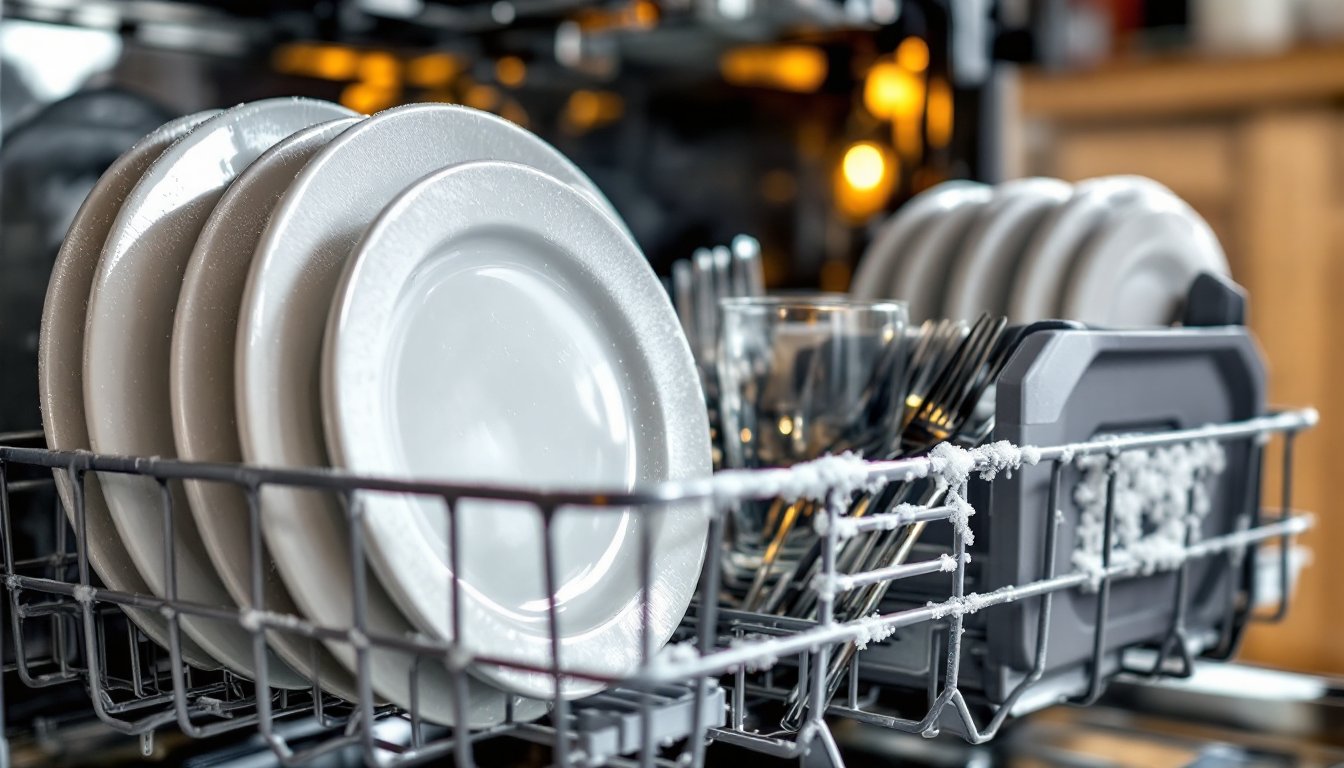
Opening the dishwasher to find a chalky, white film coating your supposedly clean dishes is frustrating, and surprisingly common. That residue isn’t dirt or leftover food. It’s usually a combination of hard water minerals or detergent buildup that’s clinging to glassware, plates, and silverware. The good news? This isn’t a sign your dishwasher is broken. In most cases, it’s fixable with a few adjustments to your wash routine and some basic maintenance. This guide walks through what causes white residue, how to remove it, and most importantly, how to keep it from coming back.
Table of Contents
ToggleKey Takeaways
- White residue on dishes comes from hard water minerals or excess detergent that didn’t rinse properly during the wash cycle.
- Remove existing residue by soaking affected dishes in equal parts white vinegar and warm water for 15–30 minutes, then gently scrubbing and drying by hand.
- Clean your dishwasher interior monthly by running empty cycles with white vinegar and baking soda to eliminate mineral buildup and prevent residue from returning.
- Reduce dishwasher residue by using the correct amount of detergent (one tablespoon of powder or a single pod), adjusting rinse aid to a low setting, and running hot water before starting a cycle.
- Install a whole-house water softener if you have very hard water (above 10.5 gpg) to eliminate calcium and magnesium deposits at the source.
- Maintain your dishwasher monthly by cleaning the filter, inspecting spray arms for clogs, and wiping door seals to ensure optimal performance and residue-free dishes.
What Causes White Residue on Dishes After Washing?
Understanding the source of the problem is half the battle. White residue on dishes typically comes from two culprits: mineral deposits from hard water or excess detergent that didn’t rinse away properly.
Hard Water Minerals
Hard water contains elevated levels of calcium and magnesium. When water evaporates during the drying cycle, these minerals are left behind as a white, chalky film. If you live in an area with hard water (most of the U.S. falls into this category), you’ve probably noticed scale buildup on faucets, showerheads, and now your dishes.
The harder your water, the more pronounced the residue. Water hardness is measured in grains per gallon (gpg). Anything above 7 gpg is considered hard, and above 10.5 gpg is very hard. You can test your water with an inexpensive kit from a hardware store or check your local water quality report online.
Hard water doesn’t just affect your dishes, it also reduces your dishwasher’s efficiency over time. Mineral deposits can clog spray arms, coat heating elements, and gum up the interior components. Regular maintenance becomes critical in hard water areas.
Too Much Detergent or Rinse Aid
More detergent doesn’t equal cleaner dishes. In fact, using too much detergent often causes a white, soapy residue because the rinse cycle can’t fully wash it away. Modern dishwashers use less water than older models, so they require less detergent, usually one to two tablespoons of powder or a single pod.
Rinse aid helps water sheet off dishes and prevents spotting, but overdoing it creates its own film. If you’re seeing a slippery, almost oily white coating instead of a chalky one, rinse aid is the likely culprit. Most dishwashers have an adjustable rinse aid dispenser: dialing it down one or two notches can solve the problem.
Also, check your detergent’s expiration date. Old or improperly stored detergent (especially powder that’s absorbed moisture) clumps and doesn’t dissolve properly, leaving residue behind.
How to Remove White Residue From Your Dishes
If your dishes already have a white film, you don’t need to rewash them endlessly. A targeted cleaning approach works faster.
For glassware and dishes:
-
Soak in white vinegar. Fill your sink or a large basin with equal parts white vinegar and warm water. Submerge the affected dishes and let them sit for 15–30 minutes. The acidity in vinegar dissolves mineral deposits.
-
Scrub gently. Use a soft sponge or microfiber cloth to wipe away loosened residue. Avoid abrasive pads on glassware, they can scratch the surface.
-
Rinse with clean water. Rinse thoroughly under warm running water to remove any vinegar smell and remaining film.
-
Dry by hand. Use a lint-free towel to dry immediately. This prevents new water spots from forming as dishes air-dry.
For stubborn buildup on glassware, many experts recommend using a paste made from baking soda to gently buff away cloudiness without scratching. This method is particularly effective on wine glasses and tumblers that have accumulated months of hard water deposits.
For the dishwasher interior:
If residue is showing up on every load, the problem isn’t just the dishes, it’s inside the machine.
- Remove any visible debris from the filter and spray arms.
- Run an empty cycle with two cups of white vinegar placed in a dishwasher-safe bowl on the top rack. This breaks down mineral buildup and detergent residue inside the tub, on the heating element, and in the spray jets.
- Follow up with a second empty cycle using one cup of baking soda sprinkled on the bottom of the tub. This deodorizes and further scrubs away film.
Simple Solutions to Prevent White Film Buildup
Prevention is easier than scrubbing residue off every dish. A few adjustments to your dishwasher routine will keep white film from forming in the first place.
Use the right amount of detergent. Start with less than you think you need, one tablespoon of powder or a single pod for most loads. If dishes come out clean, you’re using enough. If not, add a little more next time. Overdoing it guarantees residue.
Switch to a detergent designed for hard water. Some detergents contain water softeners or chelating agents that bind to minerals and prevent them from depositing on dishes. Look for products labeled “hard water formula” or “anti-residue.”
Add a rinse aid, but don’t overdo it. Rinse aid helps water bead up and roll off dishes instead of evaporating and leaving minerals behind. Fill the rinse aid dispenser and adjust it to a low or medium setting. If you see excessive foam or film, dial it back.
Run hot water before starting the dishwasher. Your dishwasher performs best when it starts with hot water, ideally 120°F. Run your kitchen faucet until the water is hot, then start the cycle. This ensures detergent dissolves completely and rinses away properly.
Install a water softener. If you have very hard water (above 10 gpg), a whole-house water softener is the most effective long-term solution. It removes calcium and magnesium before they enter your plumbing, which benefits not just your dishwasher but also your water heater, washing machine, and fixtures. Homeowners often advice on water softener installation as a top maintenance upgrade for hard water areas.
Use a dishwasher cleaner monthly. Commercial dishwasher cleaners (tablets or liquid) are formulated to remove scale, grease, and detergent buildup. Run one through an empty cycle once a month as preventive maintenance. Some products also target odor and bacteria.
Don’t pre-rinse excessively. Modern dishwashers and detergents are designed to work on dirty dishes. If you rinse everything spotless before loading, the detergent has nothing to cling to and may not activate properly, leaving residue instead.
When to Clean Your Dishwasher to Eliminate Residue
Regular dishwasher maintenance isn’t optional if you want residue-free dishes. Most homeowners overlook this step until performance drops noticeably.
Monthly tasks:
-
Clean the filter. Pull out the lower dish rack and locate the cylindrical or flat filter at the bottom of the tub. Twist or lift it out (check your owner’s manual for the exact mechanism) and rinse under hot water. Use a soft brush to scrub away trapped food particles and grease. A clogged filter reduces water flow and cleaning power.
-
Inspect and clear spray arms. Remove the spray arms (they usually twist or pop off) and check the small holes for clogs. Use a toothpick or thin wire to clear any mineral buildup or debris. Hold them under running water to flush out loosened material.
-
Wipe door seals and edges. Food and detergent residue collect along the rubber gasket and door edges. Wipe them down with a damp cloth and a little dish soap. This prevents mold, odors, and buildup that can transfer back onto dishes.
Every 3–6 months:
-
Run a deep-clean cycle with vinegar and baking soda as described earlier.
-
Check the drain. Remove the filter and look into the drain area for any standing water, debris, or buildup. If water isn’t draining completely, you may have a clog further down the line or a faulty drain pump. That’s a job for a service tech if basic cleaning doesn’t resolve it.
Many household maintenance guides recommend adding dishwasher cleaning to your seasonal checklist alongside HVAC filter changes and gutter cleaning. It’s a small task that prevents bigger headaches.
Signs your dishwasher needs immediate attention:
- Dishes come out dirty or gritty even after cleaning the filter
- Water pools at the bottom after a cycle
- Unusual noises during operation
- Error codes on the control panel
If basic maintenance doesn’t fix persistent residue or performance issues, it may be time to call a repair tech. Problems with the heating element, water inlet valve, or circulation pump require professional diagnosis.
Conclusion
White residue on dishes is annoying, but it’s almost always fixable with smarter detergent use, better water management, and consistent dishwasher maintenance. Start by adjusting your detergent amount and running a vinegar cleaning cycle. If hard water is the root cause, consider a water softener or switch to a hard-water detergent formula. Keep your filter and spray arms clean, and don’t skip monthly maintenance. With these steps, your dishes will come out spotless, and stay that way.