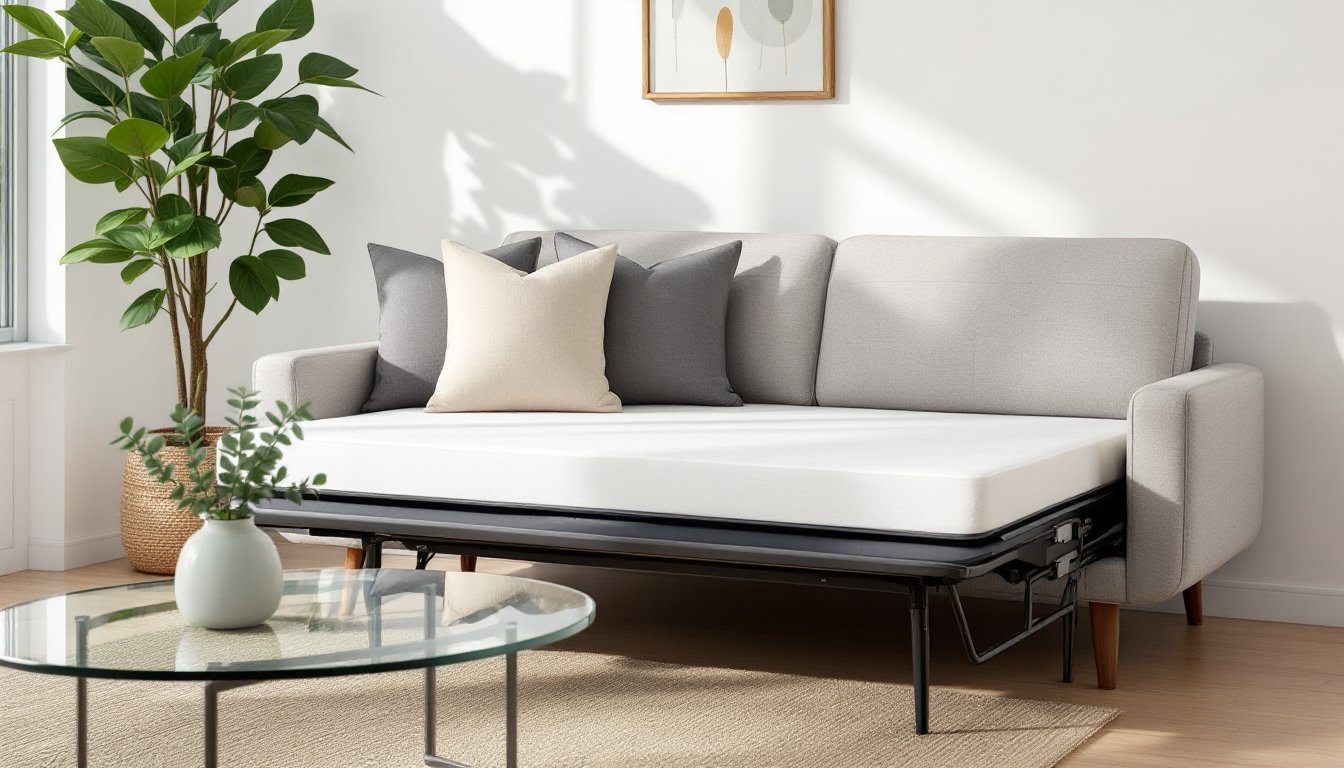
Finding furniture that pulls double duty isn’t just smart, it’s essential for anyone juggling space constraints, overnight guests, or a growing family. A sleeper sofa from Crate and Barrel offers more than a place to crash: it’s a statement piece that blends high-end design with real functionality. Unlike budget convertibles that sag after six months, these sofas are engineered to handle nightly use without compromising on aesthetics. Whether you’re outfitting a studio apartment or adding flexibility to a guest room, understanding what sets Crate and Barrel apart, from frame construction to mattress types, helps you invest wisely.
Table of Contents
ToggleKey Takeaways
- Crate and Barrel sleeper sofas use kiln-dried hardwood frames with corner-blocked joinery, offering superior durability and structural integrity compared to budget alternatives.
- Mattress quality is the primary differentiator—gel memory foam and air-dream systems significantly outperform basic innerspring options for nightly use.
- Performance fabrics rated at 30,000+ double rubs resist staining and pilling, making them ideal for households with pets or children.
- Measure doorways, stairwells, and clearance space before ordering; most Crate and Barrel sleeper sofas ship fully assembled and won’t fit through standard residential doors.
- Regular maintenance—including monthly vacuuming, annual mechanism lubrication, and quarterly cushion rotation—can double the lifespan of your sleeper sofa.
- Popular collections like the Lounge II, Axis II, and Gather offer tri-fold mechanisms requiring only 30 inches of clearance, making them practical for compact spaces.
Why Choose a Crate and Barrel Sleeper Sofa for Your Home
Crate and Barrel builds sleeper sofas around kiln-dried hardwood frames, typically maple or oak, which resist warping and provide structural integrity far beyond particleboard alternatives. The joinery uses corner-blocked construction with glued and screwed joints, a detail that matters when you’re pulling out a queen-size mattress weekly.
The mattress itself is where most convertibles fail. Crate and Barrel offers multiple upgrade paths: 5-inch innerspring, gel memory foam, or air-dream mattresses depending on the model. The air-dream option (available on select collections) inflates to a true 10-inch depth and packs down without manual folding, a game-changer if you’ve ever wrestled a bar mechanism at midnight.
Upholstery options range from performance fabrics (polyester blends treated for stain resistance) to full-grain leather. Performance fabrics like their proprietary weaves resist pilling and hold up to 50,000+ double rubs (Wyzenbeek testing standard), making them viable for homes with kids or pets.
Sizing runs from twin sleepers (ideal for compact offices) up to queen sleepers that seat three comfortably when closed. Depth measurements matter: most Crate and Barrel sleepers sit 36–40 inches deep, so verify clearance if you’re working around a coffee table or media console.
Warranty coverage includes one year on the mattress and mechanism, five years on the frame. That’s standard for mid-to-high-end furniture but worth confirming at purchase, especially if you’re considering floor models or sale items.
Top Crate and Barrel Sleeper Sofa Collections in 2026
Modern and Contemporary Styles
The Lounge II collection remains Crate and Barrel’s bestseller for good reason. It features low-profile track arms, modular sectional compatibility, and a plush seat depth of 40 inches. The queen sleeper version uses a tri-fold gel memory foam mattress that doesn’t require bar support, eliminating the middle-of-the-back pressure point common in older mechanisms.
For tighter spaces, the Axis II offers a slimmer footprint, 35-inch depth, without sacrificing a full-size sleeper. The arms are narrower (7 inches versus Lounge II’s 9 inches), gaining you usable floor space in studios or alcoves. Upholstery leans toward small space living ideas with lighter fabrics that reflect natural light.
The Gather collection landed in early 2026 with a focus on sustainable materials: FSC-certified frames and cushions filled with 50% recycled fiber. The sleeper mechanism is German-made (a step up in durability), and the mattress sits on a slatted wood deck rather than metal mesh, improving airflow and longevity.
Traditional and Transitional Options
The Montclair rolled-arm sleeper bridges classic and contemporary. English roll arms and turned wooden legs (maple, finished in espresso or walnut) give it a tailored look that works in formal living rooms. The mechanism here is a pull-out style rather than a fold-out, so you’ll need 48 inches of clearance in front when deployed.
For transitional spaces, the Davis collection offers tight-back cushions and welted seams, a cleaner line than the Montclair but warmer than the Lounge II. It’s available in both sleeper and non-sleeper configurations, so you can mix a sleeper loveseat with a standard three-seater if you’re building a sectional.
The Willow collection (new this year) uses performance velvet, a poly-blend that mimics the hand of cotton velvet but cleans with water and mild soap. It’s a solid choice for budget home renovation stories where you want high impact without custom upholstery costs. The queen sleeper runs around $2,400–$2,800 depending on fabric grade.
Key Features to Consider Before You Buy
Mattress type dictates comfort more than cushion firmness. Innerspring mattresses (5–6 inches thick) work for occasional guests but compress quickly with nightly use. Gel memory foam or air-dream systems are worth the $300–$500 upcharge if the sofa will serve as a primary bed for more than a few nights per month.
Mechanism style varies by model. Tri-fold mechanisms (Lounge II, Axis II) require less floor clearance, about 30 inches, and deploy faster. Pull-out mechanisms (Montclair, some Davis models) need 40–50 inches of clearance but often support thicker mattresses (up to 10 inches). Test the mechanism in-store: it should extend smoothly with one hand and lock positively when open.
Cushion construction impacts seated comfort and longevity. Look for high-resiliency foam cores (1.8 lb density minimum) wrapped in fiber batting or down-blend. All-foam cushions hold their shape better: down-blend requires regular fluffing but feels softer initially. Crate and Barrel’s “Petry” cushion (used in Lounge II and Gather) combines a foam core with a feather-fiber wrap, balancing support and sink-in comfort.
Fabric durability is rated by double-rub counts. For high-traffic areas, target 30,000+ rubs. Performance fabrics (often labeled “family-friendly”) add stain-resistant treatments and tighter weaves. Leather requires conditioning every 6–12 months but ages gracefully and resists pet hair.
Dimensional planning is non-negotiable. Measure your doorways (most residential doors are 32–36 inches wide), stairwells, and hallways before ordering. Crate and Barrel sofas ship fully assembled, so a 90-inch sofa won’t fit through a 34-inch door. Some collections offer removable legs to gain 2–3 inches of clearance. When exploring design inspiration on platforms like Houzz, verify real-world dimensions against your floor plan.
Weight capacity for sleeper mattresses typically maxes at 500–600 pounds (combined). If you’re regularly hosting two adults, confirm the mechanism’s rating, cheaper convertibles often use thinner gauge steel that fatigues faster.
How to Maintain and Care for Your Sleeper Sofa
Vacuum cushions and crevices weekly using an upholstery attachment. Pet hair, crumbs, and dust accumulate in the seams and under cushions, accelerating fabric wear. For performance fabrics, spot-clean spills immediately with a 50/50 mix of water and white vinegar: blot, don’t rub, to avoid spreading the stain.
Rotate cushions every 3–4 months to distribute wear evenly. If your sofa has reversible cushions (most Crate and Barrel models do), flip them end-to-end and top-to-bottom. This simple step can double the lifespan of foam cores.
Lubricate the sleeper mechanism annually with a silicone-based spray (not WD-40, which attracts dust). Focus on pivot points, hinges, and the pull-out tracks. Open and close the mechanism a few times after lubricating to work the product in.
Protect the mattress with a waterproof, breathable cover. Even occasional-use mattresses benefit from protection against spills and body oils. Wash the cover monthly if the sleeper sees regular use.
Vacuum the mattress itself every few months when you have the sofa open. Use the same upholstery tool, working in overlapping passes to lift dust mites and allergens. For memory foam mattresses, avoid steam cleaning, moisture can degrade the foam’s cellular structure.
Tighten frame fasteners once a year. Sleeper sofas endure more stress than stationary pieces due to the moving mechanism. Check visible screws and bolts (often located under the sofa or behind removable panels) and snug them with a socket wrench or hex key. Don’t overtighten, you’re looking for firm resistance, not maximum torque.
Address stains on leather with a pH-balanced leather cleaner and a microfiber cloth. Follow up with a leather conditioner to prevent cracking. For aniline or semi-aniline leathers (which show natural grain), test any product in an inconspicuous spot first.
Refresh down-blend cushions by placing them in a low-heat dryer with two clean tennis balls for 10–15 minutes. The tumbling action redistributes the fill and restores loft. Do this every 2–3 months if you’re using the sofa daily.
Conclusion
A well-chosen sleeper sofa from Crate and Barrel isn’t a compromise, it’s a calculated move that maximizes square footage without sacrificing design integrity. Focus on frame construction, mattress type, and fabric durability over aesthetic trends. Measure twice, test the mechanism in person, and don’t skip the delivery path check. The difference between a sleeper sofa that serves you for a decade and one that becomes a Craigslist listing in three years comes down to those details.