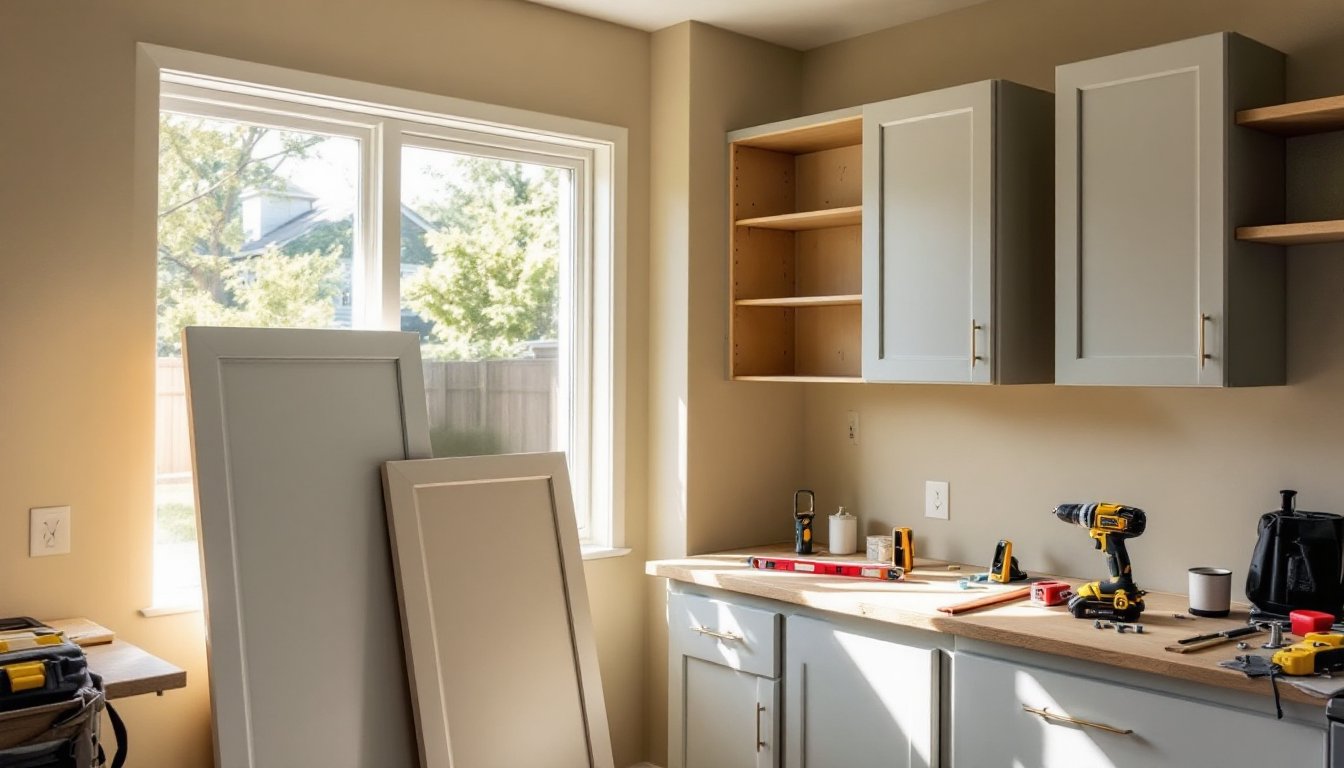
If you’re planning a kitchen remodel and the quotes from custom cabinet shops have your head spinning, Costco might not be the first place you’d think to look. But the warehouse giant has quietly become a legitimate option for homeowners who want solid cabinetry without the boutique price tag. Costco’s kitchen cabinet offerings blend affordability with respectable quality, and they’ve partnered with established manufacturers to deliver ready-to-assemble (RTA) and semi-custom options that can work for a wide range of kitchen styles. Whether you’re a confident DIYer or planning to hire a pro, understanding what Costco brings to the table, and where it falls short, can help you decide if this route makes sense for your project.
Table of Contents
ToggleKey Takeaways
- Costco kitchen cabinets offer solid mid-tier quality at lower prices than custom shops, with all-wood construction, soft-close hinges, and undermount drawer slides standard across most lines.
- A typical 10×10 kitchen remodel with Costco cabinets ranges from $2,500–$8,000 depending on the line and finishes, significantly cheaper than local custom dealers but comparable to Home Depot or Lowe’s.
- Costco cabinets are designed for DIY installation with proper tools and skills, though professional installation costs $70–$150 per linear foot and ensures proper alignment and leveling.
- With proper installation and care, Costco kitchen cabinets deliver a realistic 15–20 year lifespan, making them ideal for homeowners planning to renovate again rather than seeking heirloom-quality cabinetry.
- Style selection at Costco focuses on transitional and contemporary designs like shaker and flat-panel doors in neutral finishes, offering less customization than dedicated cabinet showrooms but more versatility for resale.
What Are Costco Kitchen Cabinets and Why Consider Them?
Costco doesn’t manufacture cabinets. Instead, they partner with established cabinet makers to offer ready-to-assemble (RTA) and semi-custom cabinets through their website and, occasionally, in-warehouse displays. These are typically all-wood construction, no particleboard boxes, with plywood sides, solid hardwood face frames, and dovetail drawer boxes. Most units use soft-close hinges and undermount drawer glides, features you’d expect in mid-range cabinetry.
The main appeal? Price and convenience. Costco’s bulk-buying power translates to lower per-unit costs compared to big-box stores or local cabinet dealers. You’re looking at cabinets that compete with mid-tier lines from Home Depot or Lowe’s but often come in a few hundred dollars cheaper for a full kitchen set. The trade-off is selection: Costco’s catalog is limited compared to a dedicated cabinet showroom. You’ll find popular door styles, shaker, raised panel, flat-panel, but don’t expect dozens of finish options or exotic wood species.
Another reason to consider them: Costco’s return policy and warranty support. While you can’t return assembled cabinets as easily as a bag of trail mix, Costco’s customer service is more responsive than many online-only RTA vendors. Most lines come with a limited lifetime warranty on boxes and a multi-year warranty on hardware.
Types and Styles of Kitchen Cabinets Available at Costco
Costco rotates its cabinet suppliers, but as of 2026, you’ll typically find offerings from manufacturers like Timberlake, JSI Cabinetry, and Florence. The selection leans toward transitional and contemporary styles, think clean lines, minimal ornamentation, and neutral finishes. Here’s what’s commonly available:
Shaker-style cabinets are the workhorse. Five-piece doors with a recessed center panel, usually in white, gray, or natural wood tones like honey oak or espresso. These fit both farmhouse and modern kitchens and are the most versatile for resale.
Flat-panel (slab) doors appeal to fans of sleek, modern kitchens. Less detail means easier cleaning, and they pair well with handleless or minimalist hardware.
Raised-panel doors show up occasionally for those chasing a more traditional look, though options here are slimmer.
Construction specs matter more than style for longevity. Most Costco lines feature:
- ¾-inch plywood box construction (not particleboard)
- Solid hardwood face frames and doors
- Dovetail or dowel drawer boxes with ¾-inch sides
- Full-extension soft-close undermount slides
- Six-way adjustable European hinges with soft-close
You won’t find inset cabinets or custom modifications like appliance garages, but the core construction rivals what you’d get from a mid-priced local shop. Standard dimensions include base cabinets at 34.5 inches tall (before countertop) and wall cabinets ranging from 30 to 42 inches. Filler strips and trim pieces are sold separately, so plan for that when measuring.
How Much Do Costco Kitchen Cabinets Cost?
Pricing depends on the line, finish, and how many cabinets your kitchen needs, but here’s a realistic breakdown for a 10×10 kitchen layout (a standard measuring benchmark in the industry):
- Budget RTA lines: $2,500–$3,500
- Mid-range semi-custom: $3,800–$5,500
- Premium offerings: $6,000–$8,000
Those figures are for cabinets only, no countertops, sink, faucet, or installation. For comparison, a similar 10×10 setup at Home Depot or Lowe’s typically runs $3,200–$6,500, while a local custom shop might quote $7,000–$12,000+.
What affects the final bill:
- Finish complexity. Painted cabinets (especially white or gray) cost more than stained wood.
- Add-ons. Crown molding, under-cabinet lighting strips, rollout shelves, and lazy Susans all increase the total.
- Shipping. Costco includes delivery on some orders over a certain threshold, but freight to rural areas can add a few hundred dollars.
Keep in mind that Costco runs periodic promotions, typically around major holidays and Costco member events, where you might snag an extra $500–$1,000 off kitchen packages. If your timeline is flexible, waiting for a sale can make a noticeable dent.
One often-overlooked cost: hardware. Most Costco cabinets ship with basic knobs or pulls, but if you want to upgrade to brushed brass or modern matte black handles, budget another $150–$400 depending on the number of doors and drawers.
Quality and Durability: What to Expect
Costco cabinets sit firmly in the mid-tier quality range. They’re not heirloom furniture, but they’re also not the flimsy particleboard boxes you’d find in a rental flip. Here’s the honest breakdown:
Pros on the quality front:
- Plywood construction resists moisture better than particleboard or MDF, crucial around sinks and dishwashers.
- Dovetail drawer joints hold up to years of daily yanking better than stapled or glued boxes.
- Soft-close hardware is standard, which reduces wear and tear from slamming.
- Finishes are factory-applied in a controlled environment, so you get more consistent color and fewer drips than a spray-painted DIY job.
Inspiring kitchen designs and organization advice from The Kitchn often highlight how durable construction matters more than trendy finishes when cabinets see heavy daily use.
Where they compromise:
- Finish durability varies by line. Some painted finishes chip more easily than others, especially on door edges and around handles.
- Limited customization. You can’t tweak internal dimensions or request non-standard heights without going off-catalog (which usually means going elsewhere).
- Assembly required on RTA models. If you rush the build or skip wood glue on joints, long-term stability suffers.
Expected lifespan: With proper installation and reasonable care, Costco cabinets should hold up for 15–20 years in a typical family kitchen. That’s not the 30+ years you might get from high-end custom work, but it’s more than adequate for most homeowners who’ll renovate again before then.
Installation Options: DIY vs. Professional Help
Costco cabinets are designed with the DIY-capable homeowner in mind, but “capable” is doing some heavy lifting there. If you’ve installed a few wall-mounted shelves and feel confident with a level, drill, and stud finder, you can handle this. If you’ve never hung anything heavier than a picture frame, hire a pro.
DIY installation:
Budget two to four full days for a small to medium kitchen if you’re working solo, or a solid weekend with a helper. You’ll need:
- 4-foot level (critical for keeping runs of cabinets aligned)
- Drill/driver with assorted bits and a countersink bit for clean screw holes
- Stud finder (don’t trust your knuckle-knock method on this)
- Clamps to hold cabinets together while you fasten them
- Shims (buy a big pack, you’ll use more than you think)
- Safety gear: goggles and gloves minimum: a dust mask if you’re cutting filler strips
Start with upper cabinets first, it’s easier to work without base cabinets in the way. Use a ledger board (a straight 1×3 or 1×4 screwed into studs at the correct height) to support cabinets while you fasten them. Each cabinet should hit at least two studs with 2.5-inch screws through the hanging rail.
Professional installation:
Many homeowners use resources like ImproveNet or similar platforms to compare local installers and get accurate project quotes. Expect to pay $70–$150 per linear foot of cabinetry for professional installation, depending on your region and the complexity of the layout. That typically includes:
- Assembly (if RTA)
- Leveling and mounting
- Filler and trim installation
- Hardware mounting
It does not usually include plumbing hookups, electrical work for under-cabinet lights, or countertop installation (which is a separate trade). If your kitchen has tricky angles, a peninsula, or an island, pros move faster and with fewer mistakes.
Permit considerations: In most jurisdictions, replacing cabinets doesn’t require a permit if you’re not moving plumbing or electrical. But, if you’re relocating a sink, adding a gas line for a range, or rerouting circuits, you’ll need permits and likely a licensed plumber or electrician. Check with your local building department before demo day.
Pros and Cons of Buying Kitchen Cabinets from Costco
Pros:
- Lower cost per unit compared to big-box stores and local dealers for similar construction quality
- All-wood construction standard across most lines, no particleboard boxes
- Soft-close hinges and drawer slides included, features that cost extra with budget brands
- Costco’s customer service and return reputation offer more peace of mind than fly-by-night online RTA vendors
- Membership perks: Costco credit card holders earn cash back, and extended warranty options are sometimes available
- Standard sizing makes replacement or expansion easier down the road
Cons:
- Limited selection of styles, finishes, and sizes compared to a dedicated cabinet showroom
- No true custom work, you’re picking from a catalog, not designing from scratch
- Assembly required on many models, which adds labor (yours or a pro’s)
- Shipping logistics can be tricky: large cabinet orders arrive on a freight truck, and you’ll need a plan for unloading and storing boxes
- Inconsistent availability, Costco rotates suppliers, so a line you liked six months ago might be discontinued
- Finish variability, some users report slight color mismatches between shipments, though this is less common with stained wood than painted finishes
Platforms like HomeAdvisor often feature cost comparisons showing that Costco cabinets land in the sweet spot for budget-conscious remodels without sacrificing core quality. That said, if you want heirloom-grade custom work or need non-standard dimensions, you’ll need to look elsewhere.
Conclusion
Costco kitchen cabinets won’t win design awards, but they’re a smart choice for homeowners who want solid, mid-tier cabinetry without the custom-shop markup. The all-wood construction, soft-close hardware, and competitive pricing make them a legitimate contender for budget-conscious remodels. Just go in with realistic expectations: limited styles, assembly required, and a DIY-friendly (but not foolproof) installation process. If you’re handy, patient, and willing to spend a weekend with a drill and level, Costco cabinets can deliver a clean, functional kitchen that holds up for years.