If you’re hunting for a dependable dishwasher without the premium price tag, Bosch’s 100 Series has probably crossed your radar. It sits at the entry point of Bosch’s lineup, promising German engineering and solid performance at a fraction of what higher-tier models cost. But does it deliver enough cleaning power and reliability to justify the investment, or are you better off spending more, or less? This review breaks down real-world performance, noise levels, capacity, and user feedback to help you decide if the Bosch 100 Series fits your kitchen and budget in 2026.
Table of Contents
ToggleKey Takeaways
- Bosch 100 Series dishwasher reviews highlight reliable, long-lasting performance with a stainless steel tub at an entry-level price under $600, making it ideal for budget-conscious buyers prioritizing durability over advanced features.
- The 48 dB noise level and NSF-certified Sanitize option set it apart from competing budget models, delivering quieter operation and effective disinfection for households with young children or immunocompromised members.
- Expect longer cycle times (2.5–3.5 hours), limited rack flexibility, and occasional top-rack spotting, requiring rinse aid and realistic expectations about convenience trade-offs for German engineering quality.
- The Bosch 100 Series is best suited for first-time buyers, renters, and standard-load households but falls short for users needing fast cycles, smart home features, or flexible dishware accommodation.
- Water efficiency at 3.5 gallons per cycle and German-engineered durability promise 10+ years of reliable service without frequent repairs, justifying the investment for homeowners seeking dependable, practical performance.
What Makes the Bosch 100 Series Stand Out?
The Bosch 100 Series stakes its reputation on simplicity and core functionality. You won’t find smart connectivity, adjustable third racks, or specialized wash zones here, this is a straightforward machine designed to wash dishes efficiently without unnecessary add-ons.
Build quality is where Bosch sets itself apart from similarly priced competitors. The tub is made of stainless steel, not plastic, which resists stains, odors, and heat damage better over the long haul. Most budget dishwashers use polymer tubs that can warp or discolor after a few years of hard use.
The EcoSense soil sensor adjusts water use and cycle time based on how dirty your dishes are, a feature typically reserved for mid-tier models. It’s a practical touch that saves water without requiring manual cycle selection every time you run a load.
Bosch also includes a 24-hour delay start and a sanitize option that meets NSF/ANSI Standard 184 for residential dishwashers, reaching temperatures high enough to eliminate 99.9% of bacteria. For households concerned about hygiene, especially those with young kids or immunocompromised members, this isn’t just a marketing bullet point.
What you won’t get: a third rack, adjustable tines in the lower rack, or a bottle-wash jet. The 100 Series is stripped down, and that’s by design. If you need those extras, you’re looking at the 300 or 500 Series models, which jump $200–$400 in price.
Performance and Cleaning Power
The Bosch 100 Series uses a single rotating spray arm on the bottom and a smaller one on top. It’s not the most advanced wash system Bosch offers, but it handles everyday loads, plates, bowls, glassware, utensils, without issue.
In typical use, the Auto cycle runs for about 2.5 to 3 hours, adjusting based on soil level. That’s longer than some competitors, but Bosch prioritizes thorough cleaning and water efficiency over speed. The Heavy cycle can stretch past 3.5 hours, which is worth knowing if you’re used to quicker machines.
Cleaning performance is solid but not flawless. Baked-on casserole dishes and oatmeal bowls sometimes need a second pass or manual pre-rinsing. The lack of a dedicated silverware spray jet means forks with dried egg or spoons with peanut butter don’t always come out spotless on the first try.
Many appliance reviews note that bottom-rack items generally fare better than top-rack plastics, which occasionally retain water spots even with rinse aid. Speaking of rinse aid: it’s not optional here. Without it, you’ll see streaking and film, especially if you have hard water.
The Sanitize option works as advertised, reaching final rinse temperatures above 155°F. If you’re washing baby bottles, cutting boards, or anything that needs serious disinfection, this feature earns its keep.
One gap: there’s no half-load or zone wash option. You’re running a full cycle whether you’ve got 12 place settings or just a few mugs. For single-person households or light users, that can feel wasteful.
Noise Level and Kitchen Comfort
Bosch markets the 100 Series as “quiet,” and compared to most budget dishwashers, it is. At 48 decibels, it’s noticeably quieter than the 52–55 dB range you’ll hear from many comparably priced models. For context, normal conversation clocks in around 60 dB.
In practice, you’ll hear a low hum during the wash cycle and occasional swishing sounds during the rinse. It’s not library-silent, Bosch’s higher-end models drop to 44 dB or lower, but it won’t interrupt kitchen conversations or compete with the TV in an open floor plan.
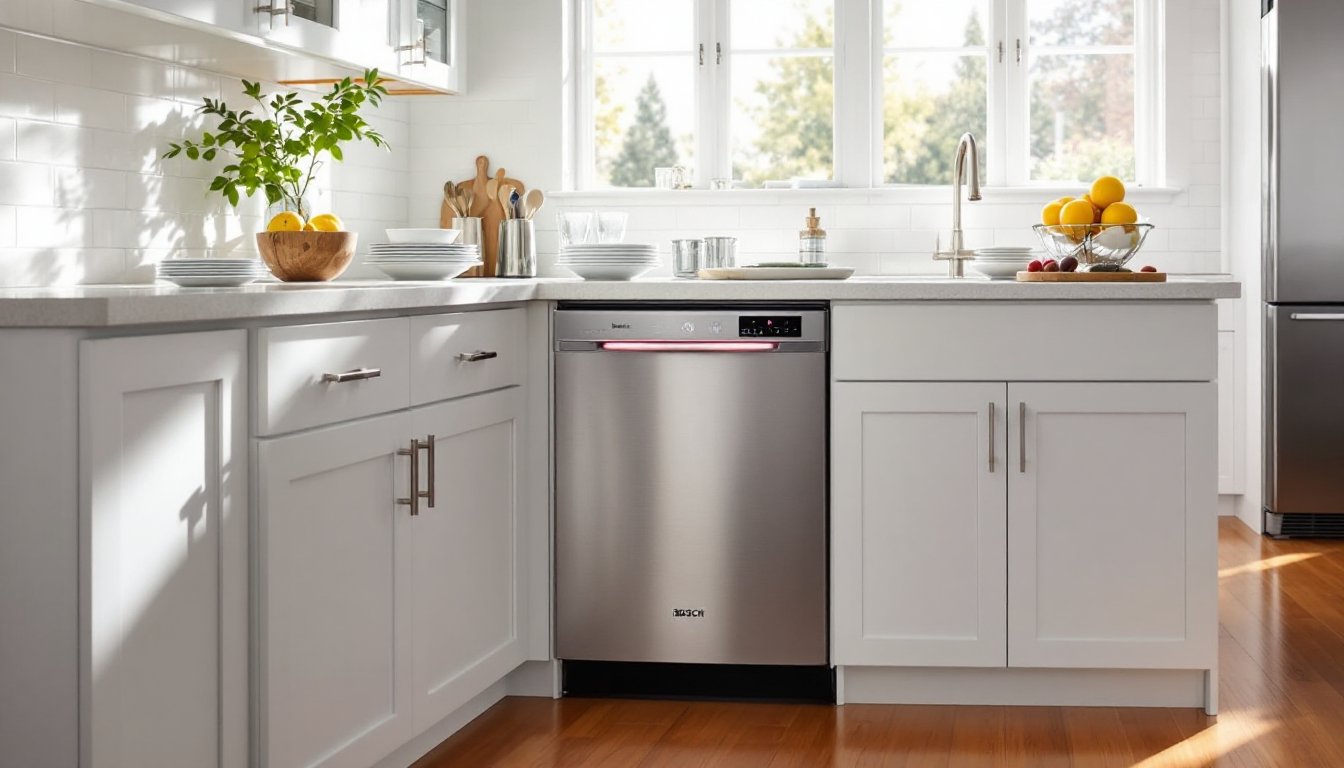
The InfoLight feature projects a small red light onto the floor when the dishwasher is running. There’s no display panel or audible alert when a cycle finishes, so that floor light is your only indicator. If your dishwasher is tucked into cabinetry where you can’t see the floor, you’ll have to open the door to check progress.
Kitchen layout matters here. In a smaller kitchen or one where the dishwasher is next to a breakfast nook, the 48 dB rating makes a real difference. In a large, open-concept space, you might not notice the noise reduction as much, but it’s still a step up from louder alternatives.
Design, Capacity, and Build Quality
The Bosch 100 Series has a standard 24-inch width and holds 12 place settings, which is typical for full-size dishwashers. The interior layout is straightforward: a lower rack for plates and larger items, an upper rack for glasses and bowls, and a removable silverware basket.
The upper rack is height-adjustable with a lever mechanism, giving you about 2 inches of clearance adjustment. It’s not the smoothest system, you have to unload the rack and pull the levers on both sides, but it works if you need to fit a tall pot or pitcher on the bottom.
The tines on the lower rack are fixed, so you can’t fold them down or rearrange them for odd-shaped items like mixing bowls or baking sheets. The upper rack has some fold-down sections, which help with stemware but aren’t as flexible as racks in pricier models.
The silverware basket is a single, removable unit. It’s not split or adjustable, and it takes up space on the lower rack that could otherwise fit another plate or two. Some users prefer this over the silverware trays found on higher models: others find it clunky.
Exterior options are limited: stainless steel or white. The stainless finish resists fingerprints reasonably well, but you’ll still see smudges under bright kitchen lighting.
Build quality is where Bosch justifies its price over cheaper brands. The door hinge and latch feel solid, with no flex or wobble. The stainless tub doesn’t retain odors, and the heating element is concealed, so there’s no risk of melting plastics that fall through the racks.
One design quirk: the detergent dispenser is on the door, and it doesn’t always release tablets cleanly. Some users report finding undissolved pods stuck in the dispenser at cycle’s end, especially with bulkier detergent packs.
Pros and Cons Based on Real User Experiences
User feedback on the Bosch 100 Series is generally positive, but there are recurring themes worth noting. These observations come from owner reviews, service reports, and appliance testing over the past year.
Pros:
- Reliability and longevity. Bosch has a strong track record for dishwashers that run 10+ years with minimal service. The 100 Series benefits from the same core components as pricier models.
- Stainless steel tub. At this price point, stainless interiors are uncommon. It’s a meaningful upgrade over plastic.
- Quieter than most budget models. The 48 dB rating is a real comfort upgrade if you’re replacing a louder machine.
- Sanitize option. NSF-certified sanitation isn’t a gimmick, it’s useful for households prioritizing hygiene.
- Water efficiency. Uses about 3.5 gallons per cycle on Auto, well below the federal EnergyStar maximum of 3.8 gallons for standard-size dishwashers.
Cons:
- Long cycle times. If you need dishes done in under two hours, this isn’t the machine. The Quick wash cycle exists but sacrifices cleaning power.
- Top rack cleaning inconsistency. Plastics and lightweight items sometimes retain water or show spotting, even with rinse aid.
- No third rack or adjustable lower tines. Flexibility is limited compared to mid-tier models.
- Detergent dispenser issues. Some users report pods not dissolving fully, especially if they’re packed tightly or the water pressure is low.
- No internal light. Loading or unloading in dim lighting requires a flashlight or overhead light, minor, but annoying.
- Limited display. No countdown timer or cycle stage indicator. You’re relying on the floor light to know if it’s running.
Who Should Buy the Bosch 100 Series Dishwasher?
The Bosch 100 Series makes the most sense for specific buyer profiles. It’s not the right fit for everyone, but it excels in particular scenarios.
Best for:
- First-time dishwasher buyers or renters upgrading from hand-washing. If you’ve never owned a dishwasher, the 100 Series will feel like a major quality-of-life improvement, and the price is easier to justify.
- Budget-conscious homeowners prioritizing reliability over features. If you want a machine that’ll last a decade without service calls and don’t care about app control or specialty racks, this is a strong choice.
- Households with standard dish loads. Families with typical plates, bowls, glasses, and utensils will find the capacity and cleaning adequate.
- Kitchens where noise matters. Open-plan layouts or homes with kitchen islands adjacent to living spaces benefit from the lower decibel rating.
- Users who value sanitation. The NSF-certified Sanitize option is a genuine selling point if you’re washing baby gear, pet bowls, or anything requiring high-heat disinfection.
Not ideal for:
- Households with heavy-duty or specialty dishware. Large pots, baking sheets, or oversized platters don’t fit well. The fixed lower tines limit flexibility.
- Users who need fast cycles. If you run dishes multiple times a day or need quick turnarounds, the long cycle times will frustrate you.
- People who want smart home integration. No Wi-Fi, no app control, no remote start. It’s a purely mechanical experience.
- Homes with very hard water and no water softener. The 100 Series struggles with spotting and film in high-mineral water conditions, even with rinse aid.
Many kitchen appliance guides position the 100 Series as a solid “starter” dishwasher, dependable and affordable, but not feature-rich enough for power users.
Conclusion
The Bosch 100 Series isn’t flashy, but it’s competent and built to last. If your priorities are reliability, a stainless tub, and quieter operation at a sub-$600 price point, it’s one of the best options in its class. Just set realistic expectations: you’re getting a workhorse, not a showcase appliance. Long cycles and limited flexibility are trade-offs for Bosch’s engineering and durability. For most homeowners, that’s a fair deal.