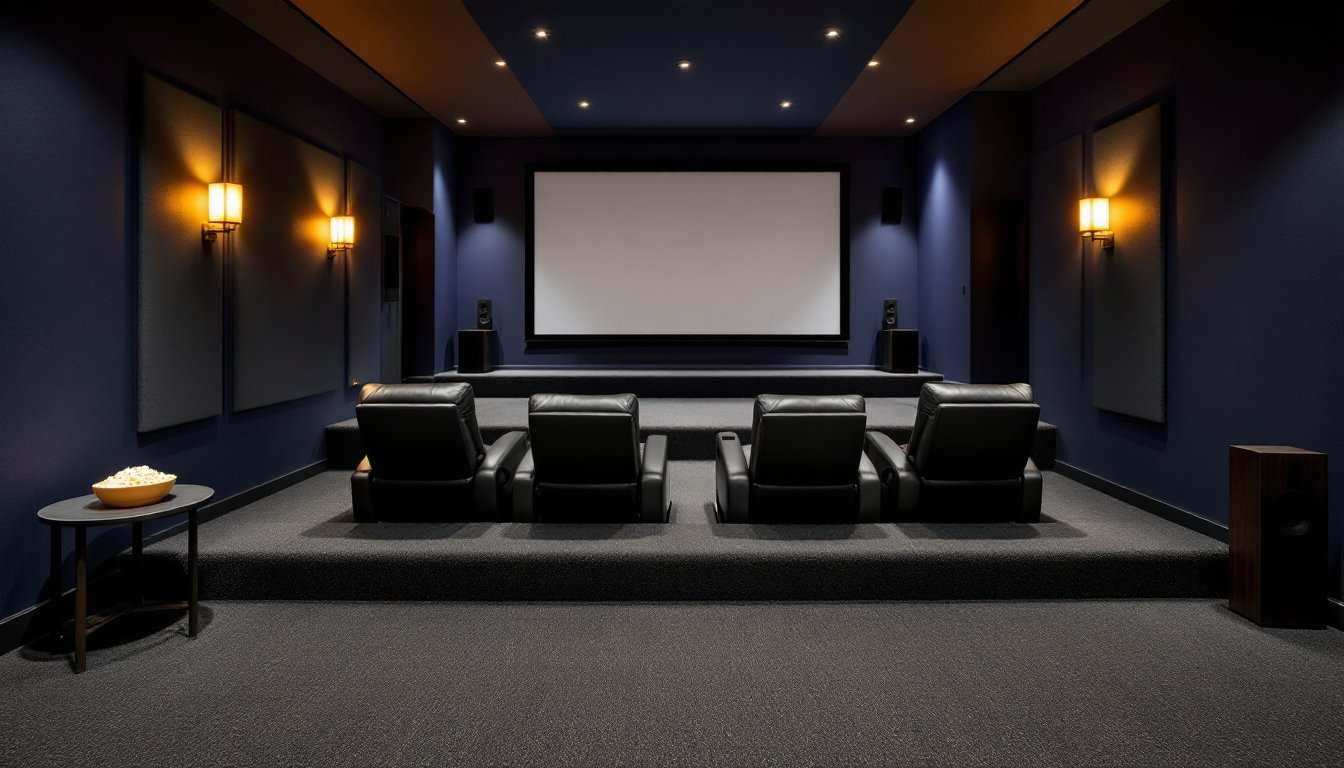
Installing the right carpet in a home theater isn’t just about comfort, it’s about performance. The wrong flooring can create sound reflections, amplify footsteps, and undermine expensive acoustical treatments. The right carpet acts as a passive sound absorber, reduces ambient noise, and adds a layer of luxury that completes the theater experience. Whether converting a basement, spare bedroom, or dedicated media room, choosing the best carpet involves balancing acoustic properties, durability, and visual appeal to match the room’s purpose.
Table of Contents
ToggleKey Takeaways
- The best carpet for a home theater room absorbs sound, reduces reverberation, and dampens footsteps, making it essential for acoustic performance and preventing dialogue muddy-sounding playback.
- Dense cut-pile carpet with 40-60 ounces per square yard, paired with 7/16-inch or thicker padding, provides superior sound absorption and vibration isolation compared to berber or loop-pile styles.
- Dark colors like black, charcoal, and deep navy are ideal for home theater rooms as they reduce light reflection and improve screen contrast while hiding stains better than lighter tones.
- Frieze, plush, textured cut pile, and Saxony are the top carpet types for theaters, with frieze and textured options offering the best balance of durability and sound dampening for multi-use spaces.
- Proper installation—including acclimation, power stretching, sealed seams, and professional help for complex layouts—ensures long-term performance and prevents ripples, buckling, and premature wear.
- Choose nylon for superior durability and furniture resilience or polyester for stain resistance and softness, and look for solution-dyed fibers with factory protectants like Scotchgard to handle spills and stains.
Why Carpet Is the Ideal Flooring Choice for Home Theaters
Hard flooring surfaces, tile, hardwood, laminate, reflect sound. In a home theater, that means dialogue bounces off the floor and mixes with direct sound from speakers, creating a muddy, echo-prone listening environment. Carpet absorbs mid- and high-frequency sound waves, reducing reverberation time and tightening the stereo image.
Beyond acoustics, carpet dampens footsteps and reduces vibration transfer to adjacent rooms. If the theater sits above living spaces or shares walls with bedrooms, a quality carpet with thick padding can prevent sound from traveling through the floor joists.
Carpet also enhances comfort. Theater seating often involves recliners or floor cushions, and a soft surface underfoot makes the room feel intentional and finished. It reduces trip hazards around risers or platform seating and provides a forgiving surface if someone stumbles in the dark. Many basement home theater ideas incorporate carpet not just for sound control but to add warmth to spaces that can otherwise feel cold and utilitarian.
Key Features to Look for in Home Theater Carpet
Acoustic Properties and Sound Absorption
Pile density and fiber type are the two biggest factors in sound absorption. A dense, cut-pile carpet with a fiber weight of 40 to 60 ounces per square yard will outperform low-pile commercial carpet or berber styles. Thicker padding, 7/16-inch rebond or memory foam, adds another layer of absorption and isolates the floor from structural vibration.
Nylon and polyester fibers both work well. Nylon is more resilient under furniture and foot traffic, while polyester offers excellent color retention and is often softer underfoot. Avoid looped or berber carpets in theaters: they reflect more sound than cut-pile styles and don’t provide the same level of acoustic dampening.
Pair the carpet with a quality underpad rated for acoustics, not just cushion. Some pads are specifically designed to reduce sound transmission and improve NRC (Noise Reduction Coefficient) ratings. If the theater doubles as a gaming room or multi-use space, the padding will also protect the carpet from rolling chairs and heavy equipment.
Durability and Stain Resistance
Home theaters see less traffic than hallways, but they face unique challenges: spilled drinks, popcorn grease, and the occasional wine stain. Look for carpet with built-in stain resistance, either solution-dyed fibers or factory-applied treatments like Scotchgard or similar protectants.
Nylon rates highest for durability and resilience. It resists crushing, holds up under recliners, and recovers well after furniture is moved. Polyester is stain-resistant by nature (it’s hydrophobic, so liquid doesn’t soak in as quickly) but can mat down under heavy furniture over time.
Check the fiber twist rating: carpets with a higher twist count (5+ twists per inch) resist matting and show less wear in high-use areas. If the theater includes tiered seating or platform risers, durability around edges and seams becomes even more critical.
Top Carpet Types for Home Theater Rooms
Frieze (twisted pile): High-twist fibers create a textured, informal look and hide footprints and vacuum marks. Frieze is durable, resists matting, and offers good sound absorption. It’s ideal for multi-use theaters or spaces where kids and pets are present.
Plush (velvet) cut pile: Provides a smooth, luxurious surface with excellent acoustic properties. Plush carpet shows footprints and vacuum lines, so it’s best suited to dedicated theater rooms with controlled access. The dense, upright fibers absorb sound effectively and create a high-end aesthetic.
Textured cut pile: Balances the durability of frieze with the softness of plush. The varied fiber heights disguise wear and stains while still offering solid sound dampening. This is the most versatile option for homeowners who want performance without constant maintenance.
Saxony: Similar to plush but with a slightly taller pile and more formal appearance. Saxony works well in theaters designed to double as formal lounges or media rooms. It’s less forgiving on stains and traffic but delivers premium comfort and sound control.
Avoid berber, loop pile, and commercial-grade carpet. Loop construction reflects more sound, and berber’s tight weave doesn’t absorb mid-range frequencies effectively. Commercial carpet is built for durability, not acoustics, and typically has a thinner, harder backing that won’t dampen vibrations.
Choosing the Right Color and Style for Your Theater
Dark colors are the standard for home theaters. Black, charcoal, deep navy, and burgundy reduce light reflection from projectors and screens, preventing washed-out images and improving contrast. They also hide stains better than lighter tones.
That said, don’t default to flat black unless the theater has excellent lighting control. In a room with ambient light from sconces or LED strips, a medium-dark gray or deep brown can provide contrast without making the space feel like a cave.
Pattern vs. solid: Solid colors simplify the visual field and keep attention on the screen. Subtle patterns, heathered textures or tone-on-tone designs, can hide stains and wear without adding visual noise. Avoid bold geometric patterns or high-contrast designs: they distract from the viewing experience.
If the theater includes raised platforms or tiered seating, consider using a complementary carpet color or texture to visually define zones. A darker shade on the main floor and a slightly lighter tone on risers can improve safety and add depth to the design. Homeowners exploring home decorating ideas often find that subtle color shifts can make small theaters feel more spacious and intentional.
Texture and sheen: Matte finishes work best. Glossy or silky carpets reflect light and can create distracting highlights during movie playback. Stick with cut-pile styles that absorb rather than reflect.
Installation Tips for Home Theater Carpet
Measure twice, order once. Calculate the room’s square footage and add 10% for waste, especially if the room has angled walls, closets, or tiered platforms. Carpet is sold by the square yard, so convert measurements accordingly (divide square feet by 9).
Acclimate the carpet. Let rolls sit in the room for 24 to 48 hours before installation. This allows the fibers to adjust to the room’s temperature and humidity, reducing post-install buckling or gapping.
Install padding first. Use a 7/16-inch or 1/2-inch rebond pad rated for residential use. Thicker isn’t always better, overly soft padding can make furniture unstable and create a spongy feel underfoot. Staple or tape the padding to the subfloor, ensuring seams don’t overlap with carpet seams.
Stretch the carpet properly. Use a power stretcher, not a knee kicker alone. Improper stretching leads to ripples, buckling, and premature wear. If the theater includes platform seating, tack strips should be installed along the riser edges to secure the carpet and prevent tripping hazards.
Seal seams carefully. In larger rooms, seams are unavoidable. Use heat-activated seam tape and a seam iron to bond edges. Align the pile direction on both pieces so the seam is less visible. Run seams perpendicular to the screen when possible, viewers’ eyes naturally track horizontally, making side-to-side seams more noticeable.
Wear PPE. Carpet installation involves knee pads, utility knives, and stretchers. Protect your knees, wear safety glasses when trimming tack strips, and use work gloves to handle rough backing and padding.
If the theater sits on a concrete slab, check for moisture before laying padding. A basic moisture test involves taping a plastic sheet to the floor for 24 hours: condensation indicates a vapor barrier or sealant may be needed. For detailed room transformations and DIY techniques, many homeowners reference resources like Addicted 2 Decorating for step-by-step installation walkthroughs.
DIY vs. professional install: Carpet installation is manageable for experienced DIYers, especially in small, square rooms. Larger theaters, tiered seating, or rooms with complex layouts benefit from professional installation. Pros have the tools to stretch carpet evenly and handle seam placement in high-visibility areas. Expect professional installation to add $1 to $2.50 per square foot depending on the region and job complexity.