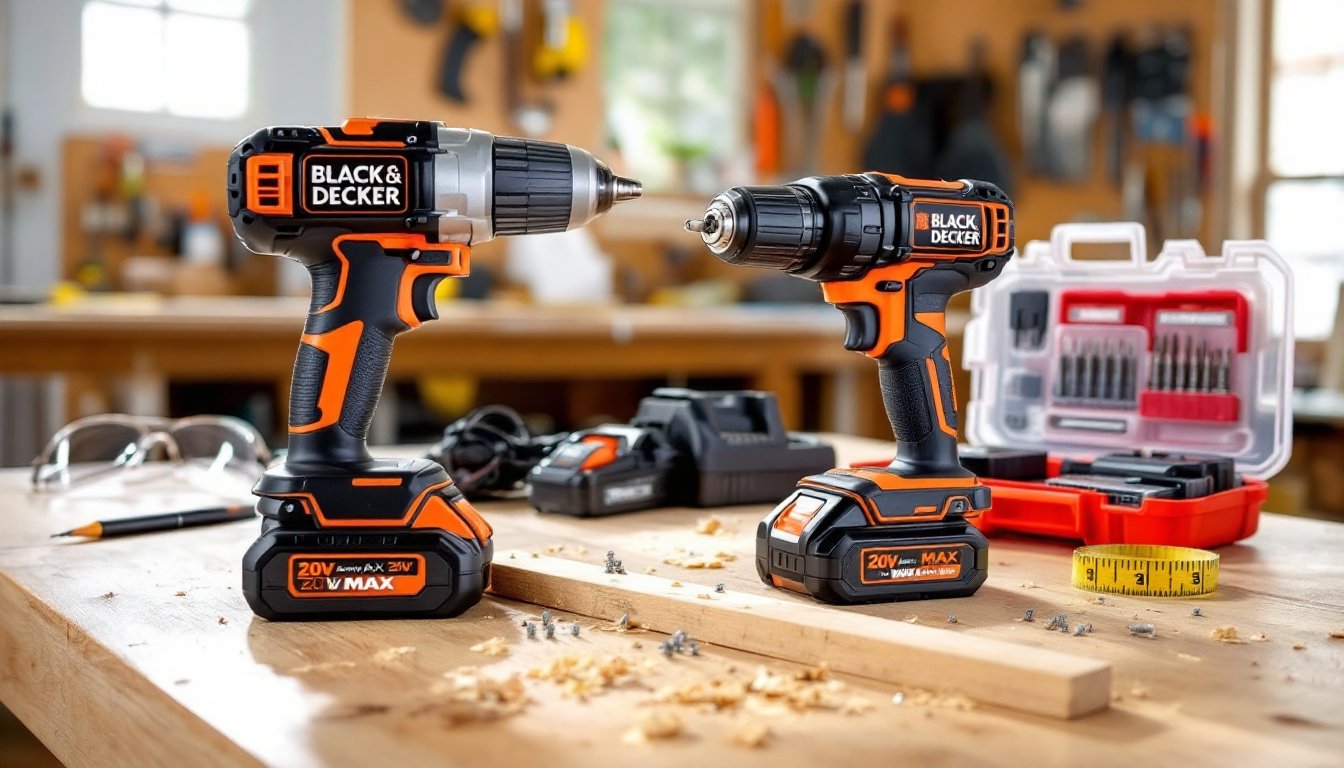
Black and Decker has been building power tools since 1910, and their cordless drills remain one of the most reliable entry points for homeowners who need solid performance without very costly. Whether you’re assembling furniture, hanging cabinets, or building a deck, choosing the right drill matters. Too little power and you’ll stall out in hardwood. Too much drill for simple tasks and you’re carrying unnecessary weight and cost. This guide walks through what makes a Black and Decker cordless drill a practical choice, which features actually matter for home projects, and how to pick a model that matches the work you’ll really do, not just what looks good on a shelf.
Table of Contents
ToggleKey Takeaways
- Black and Decker cordless drills offer an affordable, reliable balance of power and price for homeowners, with models ranging from $40–$120 and backed by over a century of manufacturing experience.
- Choose 20V MAX models for general home use, as they provide enough torque to drive deck screws and handle most fastening tasks, while 12V suits light assembly and 18V sits in the middle.
- Investing in quality bits, pre-drilling pilot holes in hardwood, and using clutch settings correctly prevents stripped screws, split wood, and extends the life of your drill.
- Lithium-ion batteries are standard on modern Black and Decker drills; pair your drill with a 2.0–4.0Ah battery depending on project scale to balance runtime and weight.
- Brushless motor models add 25–50% more runtime and efficiency, making them worthwhile for heavy-duty projects like deck-building or extensive remodeling.
- Regular maintenance—charging batteries at 40–60% for storage, cleaning the chuck, and keeping spare bits on hand—prevents downtime and maximizes tool longevity.
Why Black and Decker Cordless Drills Remain a Top Choice for Homeowners
Black and Decker drills occupy a sweet spot in the tool market: affordable, widely available, and backed by over a century of tool manufacturing experience. For homeowners tackling weekend projects rather than full-time construction, that combination beats expensive pro-grade models that offer features most DIYers will never use.
The brand’s 20V MAX lithium-ion platform covers everything from basic drilling to light deck-building. These aren’t site-rated contractor tools, they won’t survive daily abuse on a job site, but they handle typical homeowner tasks like installing door hardware, assembling deck railings, driving 3-inch deck screws into framing, and drilling pilot holes in hardwood trim. That’s the work most people actually do.
Another practical advantage: parts and batteries are easy to find. Home centers stock Black and Decker batteries, chargers, and replacement chucks. If a battery dies three years in, you’re not hunting down discontinued SKUs online. The 20V MAX battery fits across multiple tools in their lineup, so one battery system can power a drill, circular saw, and sander.
Price matters too. Black and Decker drills typically run $40–$120 depending on voltage and kit contents, making them accessible for homeowners who need a reliable drill but don’t want to invest $200+ in a premium brushless system. For someone building a single deck or refreshing kitchen cabinets, that’s a sensible budget.
The drills also ship as complete kits with chargers and carrying cases, which saves the hassle of sourcing accessories separately. You unbox it, charge it, and start working, no need to decode battery platform compatibility or buy a charger as a separate line item.
Key Features to Look for in a Black and Decker Cordless Drill
Not all cordless drills are built the same, even within one brand. Here’s what actually affects performance on home projects.
Voltage dictates power. Black and Decker offers 12V, 18V, and 20V MAX models. A 12V drill handles light-duty tasks, assembling furniture, driving small screws into softwood, drilling holes in drywall for anchors. It’s compact and lightweight, which helps in tight spaces like under-sink cabinet installs. But try driving 2.5-inch construction screws into doubled-up 2x4s and a 12V drill will bog down.
For general home use, 20V MAX models offer the best balance. They’ll drive deck screws through pressure-treated lumber, drill 1-inch holes in hardwood for dowels, and handle most fastening tasks without stalling. An 18V drill sits in the middle but is less common in current Black and Decker lineups.
Clutch settings prevent overdriving screws and stripping heads. Black and Decker drills typically include 11 to 24 clutch positions plus a drill mode. Set the clutch low for drywall or softwood trim (to avoid sinking screw heads too deep), higher for structural fasteners. It’s a simple adjustment collar behind the chuck, and learning to use it prevents damaged screw heads and split wood.
Chuck size on most models is 3/8-inch or 1/2-inch. A 3/8-inch keyless chuck handles standard drill bits and driver bits fine for trim work and light framing. A 1/2-inch chuck grips larger bits needed for boring holes through joists or mixing paint and joint compound with paddle attachments. For homeowner use, 3/8-inch covers 90% of tasks.
Two-speed gearing is standard on better models. Low speed (0–450 RPM) delivers higher torque for driving screws and drilling large holes. High speed (0–1,500 RPM) suits smaller holes in wood and metal. Single-speed drills skimp on this and struggle with heavy-duty fastening.
Battery Power and Runtime Considerations
Lithium-ion batteries are now standard across Black and Decker’s cordless lineup, replacing older NiCad cells. Lithium-ion batteries hold a charge longer in storage, weigh less, and deliver consistent power until nearly depleted, NiCad batteries fade as they drain.
Black and Decker’s 20V MAX batteries come in 1.5Ah, 2.0Ah, and 4.0Ah capacities. Amp-hours (Ah) measure runtime. A 1.5Ah battery might drive 100–150 deck screws before needing a recharge. A 4.0Ah battery doubles or triples that, which matters on bigger projects like building a fence or framing a shed. The tradeoff: higher-capacity batteries add weight and cost.
For occasional DIY work, hanging shelves, installing cabinet hardware, a 1.5Ah or 2.0Ah battery is plenty. If you’re building a deck or doing a full kitchen remodel, spend the extra $30–$50 on a 4.0Ah battery or a kit with two batteries so one charges while you work with the other.
Charge time varies. Standard chargers take 60–90 minutes for a full charge. Rapid chargers (sold separately or in premium kits) cut that to 30–40 minutes. For most homeowners, a standard charger works fine, charge overnight or during lunch.
Best Black and Decker Cordless Drill Models for Different DIY Projects
Matching the drill to the project prevents frustration and wasted money. Here’s how Black and Decker’s current models stack up for typical home tasks.
For light assembly and furniture projects: The Black and Decker 12V MAX drill is compact, weighs about 2.4 pounds, and fits easily in a toolbox. It handles IKEA furniture, hanging curtain rods, installing drawer pulls, and other tasks involving small screws and softwood. It won’t drive structural fasteners, but it’s perfect for renters or occasional users. Runtime on a 1.5Ah battery is enough for a day’s worth of light work.
For general home maintenance and repairs: The Black and Decker 20V MAX drill/driver is the workhorse model. It delivers up to 350 inch-pounds of torque, which is enough to drive 3-inch deck screws through doubled joists and bore 1-inch holes in framing lumber. The two-speed gearbox and 11-position clutch make it versatile. Pair it with a 2.0Ah battery and you’ve got a drill that handles deck-building, fence repairs, cabinet installation, and basic remodeling. Testing from reputable sources like This Old House consistently ranks mid-tier 20V models as solid performers for homeowner use.
For heavy-duty projects and frequent use: Black and Decker’s 20V MAX drill with a brushless motor adds efficiency and runtime. Brushless motors reduce friction, run cooler, and extend battery life by 25–50% compared to brushed motors. If you’re building a large deck, framing a shed, or doing extensive remodeling, the brushless model justifies the $20–$30 premium. Pair it with a 4.0Ah battery for all-day runtime.
For tight spaces: The Black and Decker 20V MAX compact drill shortens the overall length by about an inch, which helps when installing under-cabinet lighting, working inside closets, or reaching behind appliances. It sacrifices a bit of torque (usually around 280 inch-pounds) but still handles most fastening tasks.
Avoid the temptation to buy the cheapest drill on the shelf. A $35 corded drill might seem like a bargain, but dragging an extension cord while balancing on a ladder or working outdoors is miserable. Spend the extra $20 for a cordless model and you’ll actually use it.
How to Get the Most Out of Your Black and Decker Cordless Drill
A decent drill performs better with good habits and the right accessories. Here’s what makes a difference.
Use the correct bits. Cheap bits strip screw heads and dull fast. Spend $15–$25 on a quality bit set with impact-rated driver bits (they’re more durable even in a standard drill). For drilling, titanium-coated twist bits handle wood and metal. Spade bits bore large holes in framing lumber. Forstner bits cut clean, flat-bottomed holes for cabinet hinges.
Pre-drill pilot holes in hardwood and near board ends. Driving a screw without a pilot hole splits oak, maple, and end grain. Use a bit slightly smaller than the screw’s core diameter (not the thread diameter). This simple step prevents cracked trim and blown-out drawer fronts.
Adjust clutch settings for the material. Start low and increase the clutch position if the drill stops before the screw seats. For drywall, set the clutch to stop just as the screw dimples the paper without tearing through. For structural fasteners in framing lumber, switch to drill mode (the drill symbol past all clutch numbers) for maximum torque.
Charge batteries correctly. Store lithium-ion batteries at 40–60% charge if you won’t use the drill for several months. Leaving them fully charged or fully drained shortens lifespan. Charge them in moderate temperatures, extreme heat or cold degrades cells. If a battery won’t hold a charge after two years of regular use, replacement batteries run $25–$60 depending on capacity.
Maintain the chuck. If bits slip, tighten the chuck firmly by hand, overtightening with pliers can crack the jaws. Wipe out dust and debris periodically. A drop of lightweight machine oil on the chuck threads once a year keeps it turning smoothly.
Wear safety gear. Always use safety glasses when drilling, metal shavings and wood chips fly at eye level. Leather gloves protect hands when working with sharp edges or rough lumber. For prolonged drilling in masonry or metal, hearing protection is smart: drills under load hit 85–95 decibels. Homeowners following proper tool safety protocols reduce injury risk significantly.
Common Issues and Troubleshooting Tips
Even reliable drills hit snags. Here’s how to diagnose and fix common problems.
Battery won’t charge: Check the charger LED. A solid red light usually means charging: green means complete. If the LED doesn’t light, test the outlet. If the outlet works, the charger may be dead, replacements cost $20–$35. If the charger works but the battery won’t charge, the battery cells may be shot. Black and Decker batteries typically last 300–500 charge cycles: after that, capacity drops.
Drill loses power under load: The battery may be low, lithium-ion batteries maintain voltage until nearly empty, then drop off fast. Charge it fully and retry. If the problem persists, you might be exceeding the drill’s torque rating. A 12V drill will stall driving large screws into hardwood: step up to a 20V model. Alternatively, pre-drill pilot holes to reduce resistance.
Chuck won’t grip bits: Remove the bit and clean out sawdust from the chuck jaws. Open and close the chuck a few times to clear debris. If bits still slip, the chuck jaws may be worn, replacements cost $15–$25 and install with basic hand tools. YouTube has step-by-step videos for most Black and Decker models.
Drill won’t run: Check that the battery is seated fully, a loose connection looks installed but doesn’t make contact. Try a different battery if you have one. If multiple batteries fail, the drill’s internal switch or motor may be faulty. For drills under warranty, contact Black and Decker. Outside warranty, repair costs often exceed replacement cost for budget models.
Stripped screw heads: You’re likely using worn bits or the wrong bit type. Phillips bits cam out easily under torque, switch to square-drive (Robertson) or Torx screws for better grip. If you must use Phillips, replace bits every few months. Impact-rated bits resist rounding.
For ongoing home maintenance tasks, keeping spare batteries and fresh bits on hand prevents downtime. A second 2.0Ah battery costs about $30 and doubles your working time before needing to stop and recharge.
Conclusion
Black and Decker cordless drills deliver solid performance for homeowners who need reliable tools without pro-grade pricing. Match the voltage to your projects, 12V for light work, 20V MAX for general use, brushless models for heavy or frequent tasks. Invest in quality bits, pre-drill hardwood, and adjust the clutch for the material. Keep batteries charged and stored properly, and a $60–$100 drill will handle years of home projects. The right drill isn’t about brand prestige, it’s about having enough power and runtime to finish the job without frustration.