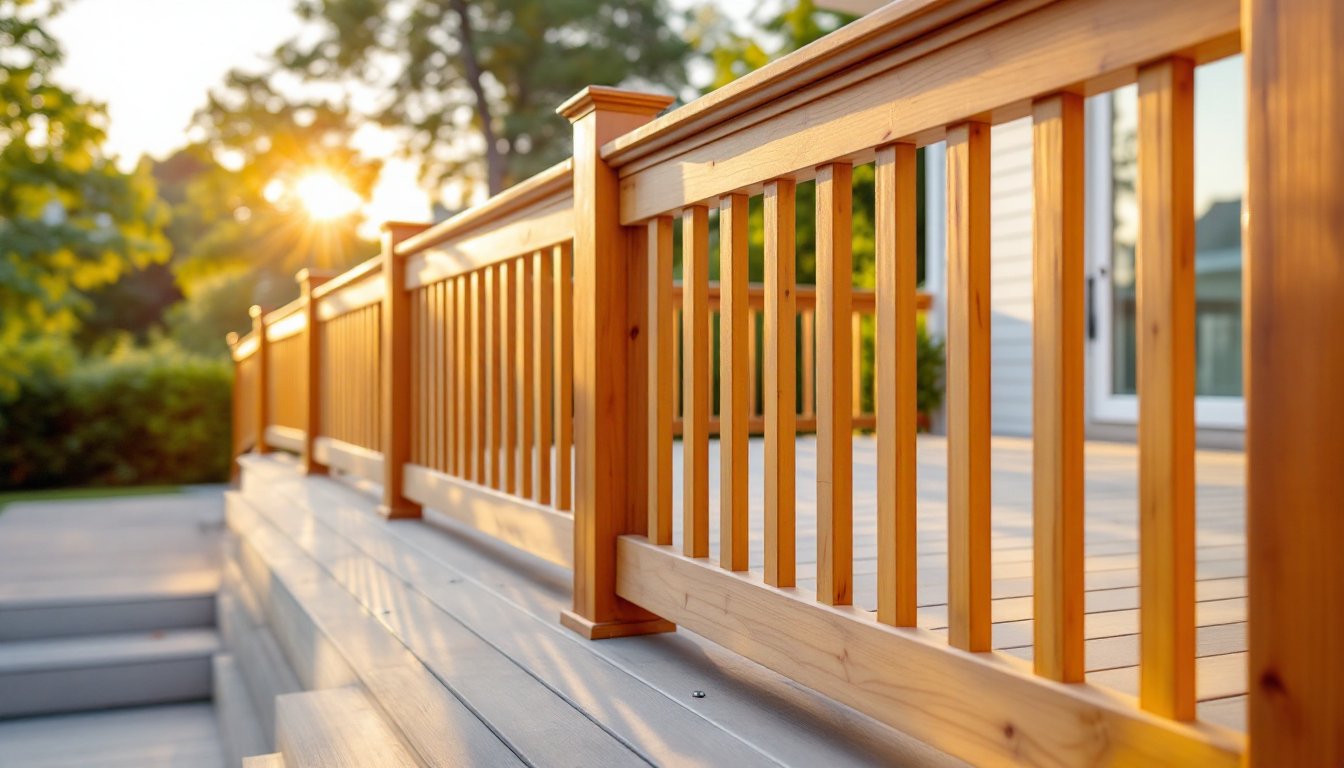
Cedar deck railings deliver unmatched warmth, natural beauty, and durability to outdoor spaces. Unlike composite or metal alternatives, cedar brings genuine character that ages gracefully and blends seamlessly with landscapes. Whether replacing tired railings or completing a new deck build, understanding cedar’s properties, installation requirements, and upkeep needs will help homeowners tackle this project with confidence. This guide covers everything from selecting the right cedar system to securing posts properly and keeping the wood protected against the elements for years to come.
Table of Contents
ToggleKey Takeaways
- Cedar deck railing systems offer 15–20 years of outdoor durability thanks to natural oils and thujaplicins that resist rot, decay, and insect damage without chemical treatment.
- Traditional vertical baluster railings and modern horizontal designs each require specific spacing and post-centering strategies to meet code standards and provide lasting structural integrity.
- Proper post installation using engineered brackets or through-bolts is critical for lateral load resistance, as lag screws alone cannot safely support a code-compliant cedar railing.
- Sealing cedar railings within weeks of installation and reapplying every 1–3 years depending on finish type preserves color and prevents moisture damage that compromises longevity.
- Cedar deck railing installation requires precise measurement, correct fastener selection (stainless steel or coated screws), and careful attention to spacing gaps, making it achievable for experienced DIYers willing to follow local building codes.
Why Cedar Is the Top Choice for Deck Railings
Cedar stands out among railing materials for several compelling reasons. Its natural oils resist rot, decay, and insect damage, particularly western red cedar, which contains thujaplicins that act as preservatives. This means untreated cedar can last 15 to 20 years outdoors, significantly longer than most softwoods without chemical treatment.
The wood is dimensionally stable, with minimal warping or twisting compared to pine or pressure-treated lumber. Cedar’s low density makes it easy to cut, drill, and work with hand tools, while still providing adequate structural strength for code-compliant railings. Most residential deck railings require rails to withstand 200 pounds of lateral force, and properly installed cedar assemblies meet this standard.
Aesthetically, cedar offers rich color variation from light amber to deep reddish-brown. The grain is straight and uniform, ideal for staining or sealing. Even left untreated, cedar weathers to an elegant silver-gray patina that many homeowners prefer. Unlike composite materials, real wood can be sanded, refinished, or replaced in sections without mismatched textures or discontinued product lines.
Cost-wise, cedar sits between budget pressure-treated options and premium hardwoods like ipe. Expect to pay $8–$15 per linear foot for materials (prices vary by region and grade), but factor in the reduced maintenance and natural beauty that composites can’t replicate.
Types of Cedar Deck Railing Systems to Consider
Choosing the right railing style impacts both function and curb appeal. The two dominant approaches each offer distinct advantages.
Traditional Cedar Baluster Railings
Traditional systems feature vertical balusters (also called spindles or pickets) spaced between a top rail and bottom rail. Balusters are typically 2×2 or 1×4 cedar boards installed no more than 4 inches apart to meet International Residential Code (IRC) requirements that prevent a 4-inch sphere from passing through, a child-safety standard enforced in most jurisdictions.
This style provides maximum visibility, allows breezes through, and complements classic home architecture. Installation is straightforward: balusters attach to the top and bottom rails with galvanized or stainless steel screws, and the rail assembly mounts to posts set at 4 to 6 feet on center. Many DIYers find traditional railings forgiving because minor spacing irregularities are less noticeable than with horizontal designs.
For a cleaner look, homeowners often use a top cap, a 2×6 cedar board that overhangs the posts and rails, creating a finished ledge and shedding water away from end grain.
Modern Horizontal Cedar Rail Designs
Horizontal railings feature boards running parallel to the deck surface, creating contemporary lines popular with mid-century modern and minimalist homes. Typical configurations use 1×4 or 1×6 cedar boards with gaps kept under 4 inches to satisfy code.
Horizontal designs require more precision during installation. Board ends must align perfectly at posts, and any bowing or twisting is immediately visible. Posts generally need closer spacing, 4 to 5 feet on center, to prevent sagging, and many builders add a mid-span backer rail behind the boards for extra support.
This style also demands more fasteners. Each horizontal board attaches at every post, meaning a 20-foot section with six boards requires at least 36 screw connections. Use stainless steel trim screws to avoid rust stains, and predrill holes to prevent splitting near board ends.
Horizontal railings can block more breeze and reduce visibility compared to vertical balusters, so consider sight lines and airflow when choosing a design for elevated decks or windy sites.
Planning Your Cedar Railing Installation
Proper planning prevents costly mistakes and ensures code compliance. Start by checking local building codes, many jurisdictions require permits for deck railings, especially if the deck surface sits more than 30 inches above grade. Contact the local building department early to understand setback rules, inspection schedules, and any specific fastener or height requirements.
Measure the deck perimeter carefully and sketch a layout showing post locations. Posts should land at corners, direction changes, and stair openings, with intermediate posts spaced to keep rail spans within structural limits. For traditional balusters, 6 feet on center works: horizontal systems need 4 to 5 feet maximum.
Choose the right cedar grade. Clear or Select grade offers knot-free appearance and consistent color, ideal for prominent railings. Common grade (also called #2) includes knots and color variation but costs 20–30% less and performs just as well structurally. Avoid knotty cedar for horizontal rails where knots can create weak points along the span.
When attaching posts, structural connection matters more than aesthetics. Code-compliant methods for attaching deck-railing posts include through-bolting to rim joists or using engineered post-mounting hardware rated for lateral loads. Never rely solely on lag screws driven into joist ends, they can pull out under stress.
Materials list for a typical 20-foot section:
- 4×4 cedar posts (8-foot lengths: quantity depends on spacing)
- 2×4 or 2×6 cedar top and bottom rails
- 2×2 or 1×4 cedar balusters (calculate based on 4-inch spacing)
- Optional 2×6 cedar cap rail
- Stainless steel or coated deck screws (2½-inch and 3-inch)
- Post-mount hardware or ½-inch galvanized through-bolts
- Post caps (prevent water intrusion)
Tools needed:
- Miter saw or circular saw
- Drill/driver with bits
- Level (4-foot and torpedo)
- Speed square and tape measure
- Clamps
- Safety glasses and ear protection
Step-by-Step: Installing Cedar Deck Railing
Follow this sequence for a durable, code-compliant installation. Work methodically, railing errors are harder to hide than decking mistakes.
1. Set and secure the posts.
Cut 4×4 cedar posts to height. Most codes require railings 36 to 42 inches above the deck surface: confirm local standards. Mount posts to the deck frame using engineered brackets or through-bolts. If through-bolting, drill two ½-inch holes per post, staggered vertically, and use washers under nuts for secure bearing. Check plumb with a 4-foot level on two adjacent faces before tightening hardware. Install temporary bracing if needed.
2. Install the bottom rail.
Cut 2×4 cedar rails to span between posts. Position the bottom rail 2 to 4 inches above the deck surface to allow drainage and clearance for cleaning. Fasten rails to posts with 3-inch stainless steel screws, two per connection, angled slightly to increase holding power. Keep the rail level across the span.
3. Attach the top rail.
Cut and fasten the top rail at the code-required height. Use a spacer block to maintain consistent height along the entire run. Secure with two screws per post, driven from the back where possible to hide fastener heads.
4. Install balusters (traditional style).
Measure the distance between posts and divide by baluster width plus desired spacing to determine baluster count. Cut 2×2 balusters to fit snugly between top and bottom rails. Predrill pilot holes to prevent splitting, then fasten each baluster with one screw into the top rail and one into the bottom rail. Use a spacer jig, a scrap block cut to 3½ or 4 inches, to keep gaps uniform.
5. Add horizontal boards (modern style).
For horizontal systems, rip 1×4 or 1×6 boards to consistent width and length. Start at the bottom and work upward, using spacer blocks to maintain even gaps. Fasten each board end to the posts with two screws, staggered to avoid splitting. Check level frequently and adjust spacing as you go to ensure the top board aligns with the top rail height.
6. Install cap rail (optional).
Cut 2×6 cedar cap rail to overhang posts by ½ to 1 inch on each side. Miter corners at 45 degrees for a clean joint. Fasten the cap to the top rail and post tops with screws driven from below or hidden with wood plugs. This cap sheds water and creates a finished ledge for drinks or planters.
7. Add post caps.
Press or screw on decorative post caps to cover the end grain and prevent water infiltration. Cedar post tops absorb moisture and split without protection.
Safety reminder: Wear safety glasses when cutting or drilling, and use hearing protection with power saws. Work gloves prevent splinters but can catch on saw blades, remove them when operating cutting tools.
Protecting and Maintaining Your Cedar Railings
Cedar resists decay naturally, but sealing extends its lifespan and preserves color. Finish the railings within a few weeks of installation, before UV exposure begins breaking down surface lignin and causing the wood to gray.
Finishing options:
- Clear penetrating sealers (water-repellent preservatives) protect against moisture without altering color. Reapply every 1 to 2 years.
- Semi-transparent stains add subtle color while showing grain. They contain UV blockers and last 2 to 3 years.
- Solid stains cover grain and offer maximum UV protection, similar to paint. Expect 4 to 5 years between coats, but peeling may occur if the wood wasn’t properly prepped.
Before finishing, lightly sand surfaces with 120-grit sandpaper to remove mill glaze, a shiny residue that blocks sealer penetration. Wipe away dust and let the wood dry completely.
Apply finish with a brush, pad, or sprayer, following manufacturer instructions for coverage rates (typically 200–300 square feet per gallon for penetrating sealers). Work sealer into joints, end grain, and screw holes where water intrusion is most likely.
Ongoing maintenance:
- Annual inspections: Check for loose fasteners, cracked boards, or post movement. Tighten hardware and replace damaged pieces promptly.
- Cleaning: Sweep debris from horizontal surfaces and between balusters. Use a garden hose and soft brush to remove dirt: avoid pressure washers, which can splinter cedar and drive water deep into the grain.
- Refinishing schedule: When water no longer beads on the surface, it’s time to reapply sealer. Strip and recoat solid stains if peeling occurs.
For homeowners seeking low-maintenance outdoor living ideas, treated cedar offers a balance of natural beauty and reasonable upkeep, especially compared to constant composite cleaning or the intensive care required by tropical hardwoods.
With proper installation and regular care, cedar deck railings provide decades of reliable service and timeless appeal. The wood’s natural resilience and workability make it an excellent choice for DIYers willing to invest a weekend and follow code requirements. Whether opting for classic vertical balusters or sleek horizontal lines, cedar delivers the authentic warmth and character that synthetic materials simply can’t match.