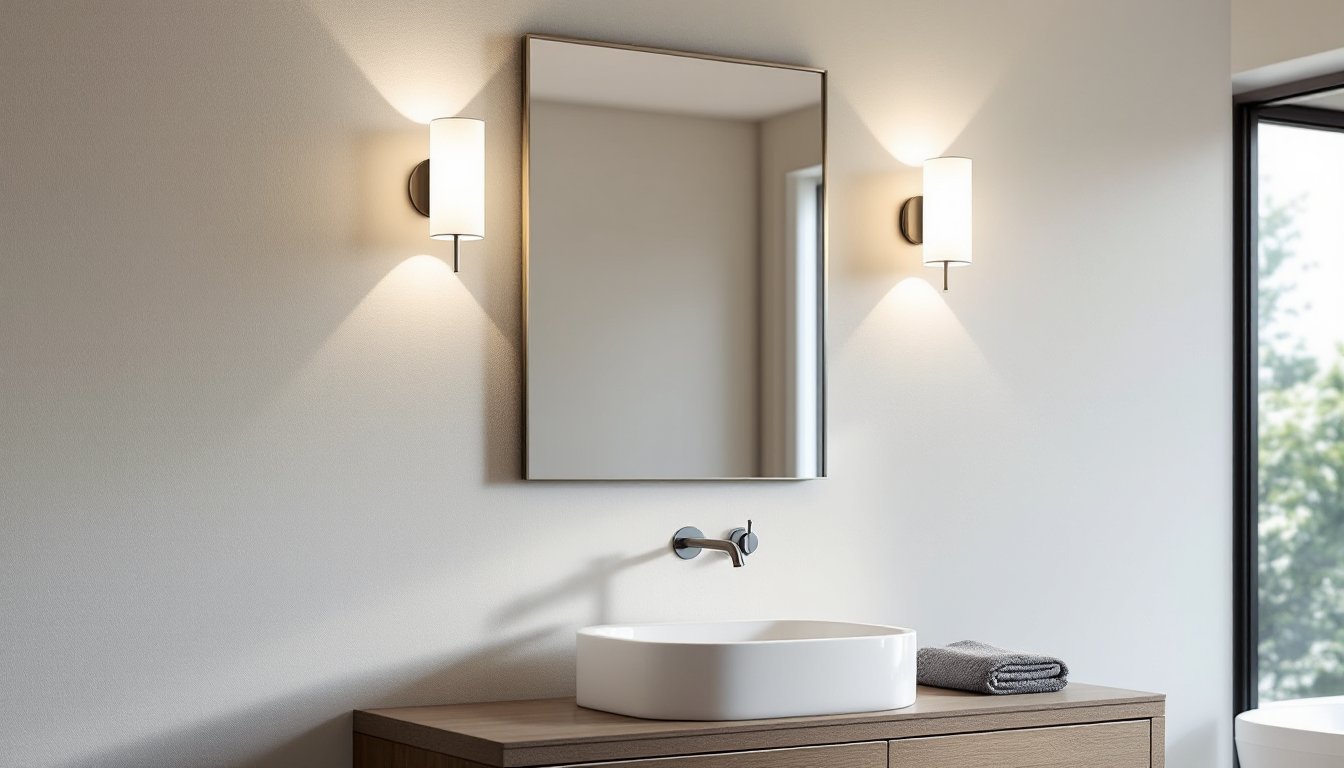
Wall sconces aren’t just backup lighting. They’re workhorses that free up floor space, highlight architectural features, and create layers of light that overhead fixtures can’t touch. Whether flanking a bathroom mirror, illuminating a dim hallway, or adding ambiance to a living room, sconces deliver focused light exactly where it’s needed, without the footprint of a table lamp or the glare of a ceiling can. Installation is straightforward for anyone comfortable running basic electrical, and the visual impact is immediate. Here’s what to know before buying, mounting, and styling decorative wall sconces in any room of the house.
Table of Contents
ToggleKey Takeaways
- Decorative wall sconces are hardwired fixtures that free up floor and table space while providing layered lighting, task lighting, and visual balance that overhead fixtures alone cannot achieve.
- Proper placement matters: vanity sconces should mount at 60–65 inches, hallway sconces 8–10 feet apart, and reading sconces at 48–54 inches—with fixture size scaled proportionally to ceiling height and room dimensions.
- Modern and industrial wall sconces use integrated LED modules lasting 25,000–50,000 hours, while traditional candle-style sconces pair well with dimmers, though not all LED candelabra bulbs are dimmable.
- Installation requires turning off power, confirming circuits are dead with a voltage tester, running properly gauged wire (14-gauge for 15-amp, 12-gauge for 20-amp circuits), and securing connections with wire nuts before mounting.
- Style your decorative wall sconces intentionally by pairing them with architectural features like fireplaces, replacing bedside lamps with swing-arm models, layering them with chandeliers, and mixing finishes deliberately for transitional or contrasting looks.
- Hire a licensed electrician if the project involves load-bearing walls, inaccessible wire runs, or new circuits, as improper installation creates fire risk and many jurisdictions require permits for electrical work.
What Are Decorative Wall Sconces and Why Choose Them?
A wall sconce is a light fixture that mounts directly to the wall, typically with the electrical box recessed into the framing or surface-mounted with a junction box. Unlike plug-in lamps, sconces are hardwired, which means cleaner lines and no visible cords.
Why choose sconces over other lighting?
- Space efficiency: They don’t occupy floor or table real estate, making them ideal for narrow hallways, small bathrooms, or rooms where furniture is tight against walls.
- Layered lighting: Sconces provide task or accent lighting that complements overhead fixtures. In a living room, for example, ceiling lights handle general illumination while sconces highlight art or architectural niches.
- Symmetry and balance: Paired sconces create visual anchors, flanking a fireplace, framing a headboard, or balancing a vanity mirror.
- Adjustability: Many sconces feature swing arms, dimmers, or adjustable shades, letting the homeowner direct light for reading, grooming, or mood.
From a code perspective, sconces count as permanent fixtures. That means they must be installed according to National Electrical Code (NEC) standards, with proper box support and wire gauge. If replacing an existing sconce, the project is straightforward. If adding a new one, expect to fish wire through walls or hire an electrician, especially in finished spaces.
Popular Types of Decorative Wall Sconces for Every Room
Sconces come in dozens of styles, but most fall into a few functional and aesthetic categories. Understanding the differences helps match the fixture to the room’s demands.
Traditional and Candle-Style Sconces
Candle sconces mimic the look of historic wall-mounted candleholders, with exposed bulbs shaped like flames and finishes in aged brass, bronze, or wrought iron. They’re common in entryways, dining rooms, and period-style homes. Many use candelabra-base bulbs (E12 socket), which are smaller than standard bulbs and produce softer light, typically 40–60 watts incandescent equivalent.
Shaded traditional sconces feature fabric or glass shades that diffuse light. They work well in bedrooms and living rooms where glare is unwanted. Expect fabric shades to require occasional cleaning or replacement, especially in kitchens or bathrooms where humidity and grease accumulate.
Both styles pair well with dimmer switches. If installing dimmers, verify bulb compatibility, LED candelabra bulbs aren’t all dimmable, and mismatched combinations cause flickering.
Modern and Industrial Wall Sconces
Modern sconces emphasize clean geometry: cylinders, cones, or flat panels in matte black, brushed nickel, or white powder coat. Many use integrated LED modules instead of replaceable bulbs, offering 25,000–50,000 hour lifespans and energy use as low as 6–10 watts. The tradeoff is that when the LED fails, the entire fixture often needs replacement.
Industrial sconces borrow from warehouse and factory aesthetics, exposed Edison bulbs, wire cages, articulated arms, and metal shades in galvanized steel or oil-rubbed bronze. They’re popular in kitchens, home offices, and loft-style spaces. Swing-arm versions are practical above desks or workbenches, positioning light exactly where it’s needed without repositioning the fixture.
Both modern and industrial styles are well-suited to task lighting. If using them for reading or detailed work, aim for color temperature in the 3000–4000K range (warm to neutral white) and a minimum 400 lumens per fixture.
How to Choose the Perfect Wall Sconces for Your Space
Start with function, then filter by style. A sconce that looks great but casts harsh shadows or doesn’t provide enough light will frustrate daily use.
Room-by-room considerations:
- Bathroom: For vanity sconces flanking a mirror, mount at eye level (roughly 60–65 inches from the floor to the center of the fixture). Use frosted or opal glass shades to eliminate shadows on the face. Aim for 1,500–3,000 lumens total across both fixtures. Verify the sconce is rated for damp or wet locations if installing within the shower zone.
- Hallway: Space sconces 8–10 feet apart along long corridors. A single bulb at 400–600 lumens per fixture is typically sufficient. Consider motion-sensor compatibility if the hallway serves bedrooms, automatic on/off reduces energy waste.
- Living room or bedroom: If using sconces for reading, position the bottom of the shade at shoulder height when seated (approximately 48–54 inches). Swing-arm or adjustable designs are ideal. For accent lighting around art or architectural features, use narrow-beam bulbs or fixtures with directional shades.
- Kitchen: Industrial sconces with downward-facing shades work well above countertops or islands, supplementing under-cabinet lighting. Ensure fixtures are rated for the higher ambient temperatures common near ranges and ovens.
Size and scale:
A common mistake is choosing sconces that are too small. In a room with 9-foot ceilings, a fixture with a 12–16-inch height feels proportional. In a powder room or narrow hallway, 8–10 inches is appropriate. When in doubt, mock up the size with cardboard or painter’s tape before purchasing.
Finish matching:
Sconces don’t need to match every other fixture in the house, but they should coordinate with dominant metals in the room, cabinet hardware, faucets, or curtain rods. Mixing metals (e.g., brass sconces with nickel faucets) is acceptable if done deliberately, not haphazardly.
Installation Tips: Where and How to Mount Your Wall Sconces
Installing a sconce where electrical already exists is a straightforward swap. Adding a new location involves running wire, cutting drywall, and possibly pulling a permit, especially if the circuit is being extended or a new breaker added.
Tools and materials:
- Wire stripper, voltage tester, drill, drywall saw, and stud finder
- Electrical box (new-work or old-work, depending on access)
- 14/2 or 12/2 NM cable (gauge depends on circuit amperage: 15-amp circuits use 14-gauge, 20-amp use 12-gauge)
- Wire nuts, electrical tape, and cable clamps
- Personal protective equipment: safety glasses, gloves, and a headlamp for dim spaces
Step-by-step installation:
- Turn off power at the breaker. Use a voltage tester to confirm the circuit is dead before touching any wires.
- Mark sconce location. Standard heights: 60–66 inches for vanity sconces, 66–72 inches for hallway or living room accent lighting. Use a level to ensure paired sconces are symmetrical.
- Cut the box opening. If installing in new construction or with attic/basement access, use a new-work box nailed to a stud. In finished walls, use an old-work (remodel) box that clamps to the drywall. Box must be rated for fixture weight, most sconces are under 5 pounds and work with standard plastic boxes.
- Fish the cable. Run wire from the nearest power source (switch, outlet, or junction box) to the new sconce location. This step is easiest with a fish tape or flexible drill bit for running wire through studs.
- Connect wires. Match black (hot) to black, white (neutral) to white, and bare copper (ground) to the green screw on the box or the fixture’s ground wire. Secure connections with wire nuts and wrap with electrical tape.
- Mount the fixture. Most sconces attach with a crossbar or strap that screws into the electrical box. Tuck wires neatly into the box, attach the fixture, and secure with provided screws.
- Install the bulb and shade, restore power, and test.
When to call a pro:
If the project requires cutting into load-bearing walls, running wire through inaccessible areas, or adding a new circuit, hire a licensed electrician. Many jurisdictions require permits for new electrical work, and improper installation creates fire risk. If uncertain, get a quote, most electricians charge $100–$200 per sconce for straightforward installs.
Creative Ways to Style Decorative Wall Sconces in Your Home
Sconces shine when they serve both form and function. Here are proven placements and styling tricks that go beyond the standard vanity-flanking setup.
Highlight architectural features:
Mount sconces on either side of a fireplace mantel, framing the focal point without crowding the hearth. Use uplighting sconces (shades pointing up) to wash the wall and ceiling, emphasizing height in rooms with tall ceilings. Designers often incorporate hallway sconce lighting to add elegance and layered illumination in transitional spaces.
Replace bedside table lamps:
Swing-arm sconces free up nightstand space while providing adjustable reading light. Mount 18–24 inches above the mattress top, centered over each side of the bed. If the bedroom lacks overhead lighting, add a second set of sconces on the wall opposite the bed for ambient light.
Layer with other fixtures:
In dining rooms, combine a central chandelier with sconces on opposite walls. Dim both fixtures for dinners, or keep sconces on alone for casual evening use. The layered approach avoids the single-point glare common with chandeliers alone.
Create gallery lighting:
Use picture lights (a type of sconce designed to mount above framed art) to spotlight paintings or prints. Aim for a 30-degree angle from the wall to minimize glare on glass. LED picture lights with 3000K color temperature render colors accurately without the heat of halogen.
Outdoor sconces for entryways:
Flank the front door with weather-rated sconces to improve visibility and curb appeal. When exploring residential design ideas, homeowners often prioritize exterior lighting as a cost-effective upgrade. Mount fixtures 60–72 inches high, or align them with the top third of the door. Dusk-to-dawn sensors or smart switches eliminate the need to manually control exterior sconces.
Mix finishes intentionally:
Pair brass sconces with modern furniture for a transitional look, or combine matte black industrial sconces with traditional trim for contrast. Interior designers featured in upscale decor publications frequently use mixed metals to add depth and prevent spaces from feeling overly coordinated.
Consider unconventional placements:
Install sconces inside walk-in closets for shadow-free dressing, or mount them low on stairwell walls to illuminate each tread without overhead fixtures. In home offices, flank a desk with adjustable sconces instead of relying solely on overhead cans or desk lamps.
Decorative wall sconces offer versatility that few other fixtures match. Whether upgrading a single bathroom or rethinking an entire home’s lighting plan, sconces deliver targeted light, free up space, and elevate design, all while staying within the skillset of a confident DIYer. Just respect the electrical code, plan placements thoughtfully, and don’t skip the dimmer.