If you’re waking up with itchy eyes, congestion, or a scratchy throat even though keeping your home clean, the problem might be what you can’t see. Pollen, pet dander, dust mites, and mold spores circulate constantly through forced-air systems and settle into carpets and upholstery. A quality air purifier won’t replace vacuuming or dusting, but it’s one of the most effective tools for reducing airborne allergens in living spaces. This guide covers what actually matters when choosing an air purifier for allergy relief, filtration standards, room coverage, and maintenance realities, along with tested models that deliver measurable results in 2026.
Table of Contents
ToggleKey Takeaways
- A true HEPA air purifier for allergies must capture 99.97% of particles 0.3 microns or larger, including pollen, pet dander, dust mites, and mold spores that accumulate indoors.
- Choose an air purifier with a CADR rating of 200+ and 4–5 air changes per hour (ACH) for effective allergen reduction, rather than relying on manufacturer’s maximum room-size claims.
- Place your purifier in the bedroom first—spending one-third of your life there means nighttime allergen exposure has the greatest impact on sleep quality and morning allergy symptoms.
- Run the unit continuously on low or auto mode rather than intermittently on high; allergens reaccumulate quickly once the purifier shuts off.
- Replace HEPA filters every 6–12 months per manufacturer guidelines and factor annual filter costs ($30–150) into your total cost of ownership when selecting a model.
- Position the air purifier at least 12 inches from walls with proper airflow intake, and avoid placement in corners or behind furniture where air circulation is poorest.
Why Air Purifiers Are Essential for Allergy Sufferers
Indoor air often contains two to five times more allergens than outdoor air, according to EPA findings. Forced-air heating and cooling systems recirculate particles throughout the home, and newer energy-efficient construction seals in contaminants along with conditioned air.
Air purifiers work by drawing air through a series of filters that trap particles before recirculating cleaned air back into the room. HEPA (High-Efficiency Particulate Air) filters capture 99.97% of particles 0.3 microns or larger, which includes most common allergens like pollen (10-100 microns), mold spores (3-100 microns), pet dander (2.5-10 microns), and dust mite waste (5-20 microns).
For people with allergies, asthma, or respiratory sensitivity, this mechanical filtration reduces the allergen load in the air they breathe for 8+ hours a night in bedrooms and during waking hours in main living areas. It’s not a cure, but it measurably lowers exposure.
Air purifiers are particularly useful in homes with pets, wall-to-wall carpeting, or proximity to high-pollen areas like fields or wooded lots. They also help in older homes where ductwork may not be sealed properly and outdoor allergens infiltrate more easily.
Key Features to Look for in an Allergy-Focused Air Purifier
Not all air purifiers are built for allergen removal. Some are designed for odor control or smoke, which require activated carbon filters rather than HEPA. When shopping specifically for allergy relief, prioritize these features:
- True HEPA filtration (not “HEPA-type” or “HEPA-like,” which don’t meet the 99.97% standard)
- CADR rating (Clean Air Delivery Rate) of at least 200+ for medium rooms
- Coverage area that matches or exceeds your room size
- Air changes per hour (ACH) of 4-5x for allergy relief
- Low noise output on sleep or low settings (under 50 dB)
- Filter replacement indicators and reasonable ongoing filter costs
Avoid units that rely solely on ionizers or UV light. These may produce ozone as a byproduct, which can irritate airways.
HEPA Filtration and Its Impact on Allergen Removal
True HEPA filters are the gold standard for allergen capture. The 0.3-micron threshold isn’t arbitrary, it’s the particle size that’s hardest to trap (called the Most Penetrating Particle Size). Particles larger or smaller are actually easier to filter due to different physical capture mechanisms.
Many purifiers use a pre-filter to catch larger debris like hair and lint, extending the life of the HEPA filter. Some add an activated carbon layer to reduce odors from pets or cooking, though that’s secondary for allergy-focused use.
Replace HEPA filters per manufacturer specs, typically every 6-12 months depending on use. A clogged filter reduces airflow and efficiency. Don’t try to vacuum or wash HEPA filters: the fibers are delicate and washing destroys their structure.
Room Size Coverage and Air Change Rate
Manufacturers list maximum room size in square feet, but that’s often optimistic. For allergy relief, you want the unit to cycle the room’s air 4-5 times per hour (ACH). Most coverage claims assume 2 ACH, which is fine for general use but insufficient for allergen reduction.
Calculate realistic coverage: if a unit is rated for 400 sq ft at 2 ACH, it’ll cover about 200 sq ft at 4 ACH. Match the purifier’s CADR rating to your room size, higher is better. CADR measures cubic feet per minute (CFM) of cleaned air for smoke, dust, and pollen separately. For a 300 sq ft bedroom with 8 ft ceilings (2,400 cu ft), you’d want a CADR of at least 200 to achieve 5 ACH.
Units tested by independent reviewers of air quality products consistently perform best when sized 20-30% above the room’s square footage.
Top-Rated Air Purifiers for Different Room Sizes
Here are tested models that deliver strong allergen reduction across typical home spaces in 2026:
Small rooms (up to 200 sq ft): Bedrooms, home offices
Look for compact units with CADR ratings of 100-150 and quiet operation under 40 dB on low settings. These typically pull 40-60 watts and fit on a nightstand or desk. Filter replacements run $30-50 annually. Ideal for personal spaces where you spend extended time.
Medium rooms (200-400 sq ft): Primary bedrooms, living rooms
Mid-sized purifiers with CADR ratings of 200-300 handle most common living spaces effectively. Expect to pay $200-400 upfront with filter costs of $60-100 per year. Many include smart features like air quality sensors and auto-adjust fan speeds. Units in this range often cover 350-450 sq ft at manufacturer specs, which translates to proper allergy-level coverage (4-5 ACH) for 200-300 sq ft actual.
For those evaluating smart home air quality systems, Wi-Fi connectivity and app control add convenience but aren’t essential for performance.
Large rooms and open-concept spaces (400-600+ sq ft)
Large-capacity units with CADR ratings of 350+ are necessary for great rooms, finished basements, or open kitchen-living areas. These run $400-700 and consume 60-120 watts at high speed. Filter replacements cost $100-150 annually. Some models use dual HEPA filters for increased airflow.
Open floor plans present challenges, air purifiers work best with doors closed to contain cleaned air. In open layouts, position the unit centrally and run it continuously rather than intermittently. You may need two medium units instead of one large unit if your space exceeds 600 sq ft with poor air circulation.
Portable vs. whole-home systems
Portable units are cost-effective and flexible, you can move them between rooms as needed. Whole-home HEPA systems integrate with HVAC ductwork but require professional installation ($1,000-3,000+) and work best with compatible forced-air systems. They’re worth considering during HVAC replacement but overkill for most allergy-focused needs.
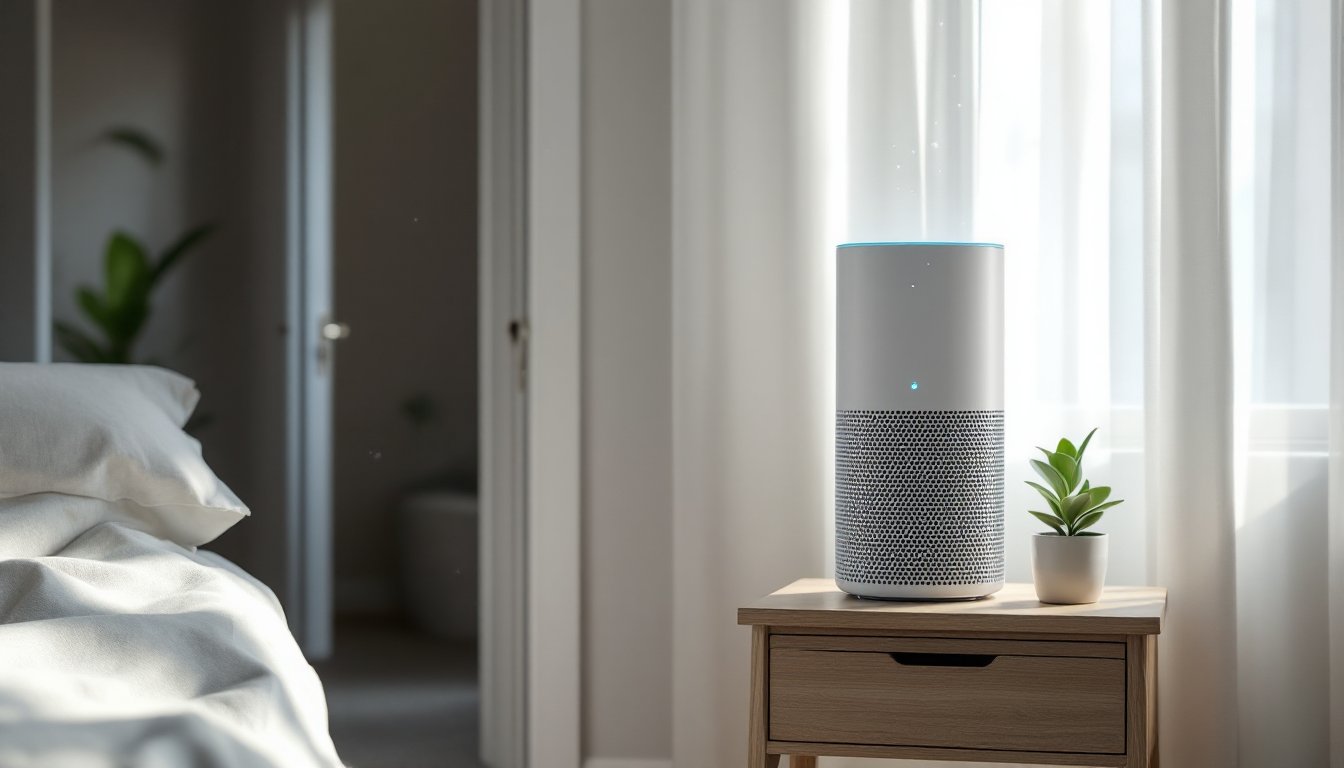
For immediate results, start with a portable unit in the bedroom. You spend a third of your life there, and nighttime allergen exposure significantly impacts sleep quality and morning symptoms.
Maintenance Tips to Maximize Air Purifier Performance
An air purifier is only as good as its maintenance schedule. Neglect it and you’re just running a noisy fan.
Filter replacement: Mark filter replacement dates on a calendar or use app reminders if your unit has smart features. Don’t wait for the filter to look dirty, microscopic allergen buildup isn’t visible. Budget for filters when purchasing: some brands charge premium prices for proprietary filters.
Pre-filter cleaning: If your unit has a washable pre-filter or foam sleeve, vacuum it monthly and rinse it every 2-3 months. Let it dry completely (24 hours) before reinstalling to prevent mold growth inside the unit.
Placement matters: Position the unit at least 12 inches from walls and furniture to allow proper airflow intake and exhaust. Don’t place it behind sofas or drapes. Put it near the center of the room if possible, or near your bed in a bedroom setup. Avoid corners where air circulation is poorest.
Run it continuously: Air purifiers work best running 24/7 on low or auto mode, not intermittently on high. Allergens reaccumulate quickly once the unit shuts off. If noise is a concern, newer models reviewed on technology comparison sites often include sleep modes under 35 dB, quieter than a refrigerator hum.
Clean the exterior: Dust the intake grills and exterior monthly with a microfiber cloth. Built-up dust on the intake reduces efficiency.
Check for recalls or updates: Register your unit with the manufacturer. Occasionally filter specifications or safety issues trigger recalls, and you’ll want to know if yours is affected.
Monitor performance: Most units include air quality indicators (PM2.5 sensors). If the indicator shows poor air quality constantly even with a new filter, check for air leaks around the filter housing or consider whether your room size exceeds the unit’s capacity.
Replacement filters cost varies widely, from $20-40 for basic models to $80-100 for premium units. Factor this into total cost of ownership. A $150 unit with $80 annual filter costs may be more expensive long-term than a $300 unit with $40 filters.
Conclusion
Choosing the right air purifier comes down to matching True HEPA filtration and adequate CADR ratings to your specific room size, then committing to the filter replacement schedule. Start with the bedroom if budget limits you to one unit, reducing nighttime allergen exposure delivers the most noticeable relief. Size the unit for 4-5 air changes per hour rather than trusting manufacturer maximum coverage claims, and plan to run it continuously on low rather than intermittently on high. An air purifier won’t eliminate the need for regular cleaning, but it’s the most effective single tool for reducing airborne allergens in lived-in spaces.